Last Updated: October 25, 2026
Quick Summary
Choose durable real estate sign stakes by matching the stake to the panel, ground, and weather before comparing materials. Galvanized steel H-stakes hold up best for long-term listings and reuse, while wood suits soft soil and short-term placements. Bury at least one third of the stake and size it to the panel’s area.
- Galvanized steel resists rust far better than bare steel, which matters in wet climates.
- At least one third of the stake should sit below the soil surface.
- A 4-foot stake suits smaller panels, while a 5-foot stake gives better stability for larger ones.
- A 24-inch by 18-inch panel presents about 3 square feet of sail.
- Clean soil off stakes before storage and touch up coating chips before rust starts.
Table of Contents
- Start With the Job: Matching Real Estate Sign Stakes to Your Sign and Site
- Metal Real Estate Sign Stakes: Where They Hold Up and Where They Fail
- Wood Sign Stakes for Real Estate Signs: When Timber Beats Steel
- Real Estate Sign Stake Size: Matching Stake Length to Panel Dimensions
- Wind, Soil and Weather: What Actually Breaks a Stake
- Reusable Sign Stakes: What Makes a Stake Worth Pulling and Replanting
- A Practical Selection Checklist Before You Order
- Getting Stakes and Panels That Fit Right the First Time
- Frequently Asked Questions
Start With the Job: Matching Real Estate Sign Stakes to Your Sign and Site
The best way to choose durable real estate sign stakes is to start with the job, not the product. A stake only works when it matches the panel it carries, the ground it enters, and the weather it faces. At Triton Sign, we see the same pattern again and again: buyers pick a stake by price, then fight it for the life of the listing.
Real estate sign stakes are the posts or frames that hold a yard sign upright in the ground. They are not a commodity. A stake that works for a lightweight directional sign on soft soil will fail under a rigid panel on rocky ground.
So before you compare materials, answer three questions:
- What is the panel? Size, weight, and thickness decide how much support you need.
- What is the ground? Soft soil, clay, gravel, and rock each call for a different tip and length.
- What is the exposure? Wind, rain, sun, and salt change how fast a stake fails.
Get those answers right and the material choice becomes obvious. Get them wrong and even the best-built stake will lean within a week.
Metal Real Estate Sign Stakes: Where They Hold Up and Where They Fail
Metal real estate sign stakes win on strength and lifespan, but the type of metal matters more than the label.
Steel H-stakes and angle stakes are the workhorses. A galvanized steel stake resists rust far better than bare steel, which matters in wet climates. The H shape gives a flat face for mounting a panel and two flanges for driving into the ground; angle stakes suit lighter panels.
Aluminum stakes are lighter and will not rust, but they bend more easily under a heavy panel or a hard knock. They suit short-term and lightweight use.
Where metal fails is predictable:
- Bare steel rusts at the ground line, where moisture and oxygen meet.
- Thin gauge bends at the soil surface under wind load.
- Coating chips at the driving point, opening a rust path.
A common mistake is buying the cheapest steel stake and expecting it to survive several listings. The gauge and coating are what you are paying for.
Best for: Long-term listings, heavier panels, and reuse across many properties.
Skip if: You need a light, low-cost stake for a single short placement.
Wood Sign Stakes for Real Estate Signs: When Timber Beats Steel
Wood sign stakes for real estate signs make sense in specific situations, and they are a poor choice in others. Timber is cheap, easy to drive, and simple to replace. It also swells, splits, and rots.
The wood stake’s strength is its grip. A wooden stake driven into soft soil holds well because the rough surface creates friction. It also takes nails and screws without special hardware, which helps with quick panel swaps.
Its weakness is water. Wood absorbs moisture at the ground line and dries unevenly, which causes warping and splitting over time. A split stake loses holding power fast.
Where timber earns its place:
- Short-term listings where the stake only needs to last a season.
- Soft, loose soil where friction matters more than stiffness.
- Budget-driven jobs with many signs and a short timeline.
Where it falls short:
- Wet climates speed up rot and swelling.
- Heavy panels overload a thin wooden stake.
- Reuse is limited because each pull damages the tip.
If you go with wood, pick a thicker stake than you think you need. The extra mass buys you time before splitting starts.
Best for: Seasonal listings, soft ground, and quick low-cost installs.
Skip if: You plan to pull and replant the same stake many times.
Real Estate Sign Stake Size: Matching Stake Length to Panel Dimensions
Real estate sign stake size is the most common source of fit problems, and the fix is simple math. Stake length must cover the panel height plus enough buried depth to hold; too short leaves the panel top-heavy, too long looks wrong and wastes material.
The rule of thumb: at least one third of the stake should sit below the soil surface. For a standard yard sign, a 4-foot stake suits smaller panels, while a 5-foot stake gives more buried depth and better stability for larger ones.
Match the stake to the panel this way:
- Measure the panel height and width.
- Add the buried depth you need for your soil.
- Check that the stake’s mounting points line up with the panel or frame.
A wide, rigid panel catches more wind and needs a stiffer, longer stake; a small directional sign can use a lighter one.
If you are still deciding on panel size, it helps to choose the right size for residential real estate signs before you lock in a stake length. Getting the panel right first saves you from buying stakes twice.
Wind, Soil and Weather: What Actually Breaks a Stake
Wind, soil, and weather break stakes in ways buyers rarely predict, and the failure almost always starts at the ground line, not the top.
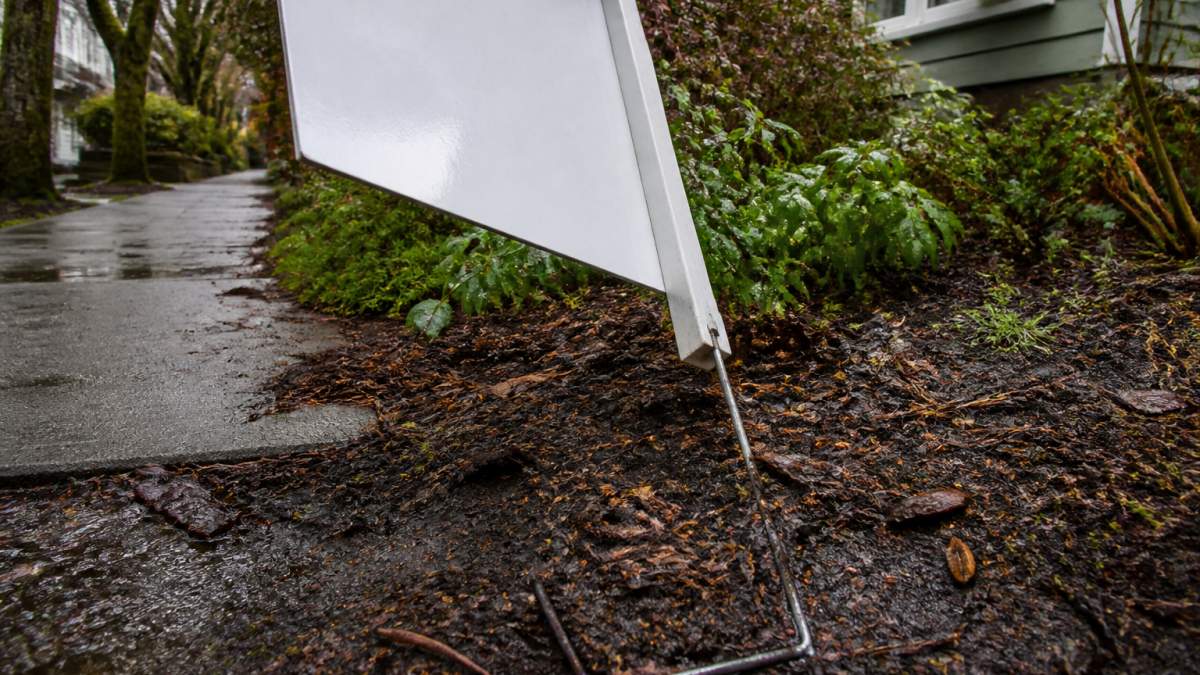
Stake shape changes how load is carried. An H-stake has two flanges driven into the soil, so it resists bending in one axis far better than a round or flat stake of the same gauge. An angle stake carries load along its bend, and a flat strap stake bends easily unless oriented with its wide face perpendicular to the prevailing wind. Orientation is free durability: set the stake so its stiff axis faces the wind the site sees most often.
Insertion depth is the anchor. A stake holds because soil friction and bearing resistance act along the buried length, so at least one third should sit below grade, and more in loose or sandy soil.
Soil type decides the failure mode. Loose sand and sandy loam give way first because friction is low, so the stake pulls out or leans.
Moisture and temperature do the slow damage. Rain and wet soil drive corrosion on steel at the ground line, freeze-thaw cycles can jack a stake upward over a season, and UV exposure dries and brittles plastic stakes.
Driving a stake through gravel or rock without a pilot hole bends the tip and weakens the whole stake. The bend you cannot see below ground is where it snaps later.
The practical lesson: pick the stake for the soil and wind, not just the panel. If you want the full installation steps, our guide on how to install real estate signs safely and securely walks through depth, angle, and anchoring. And because weather damage is constant in this region, our tips for maintaining real estate signs in Northwest weather cover the upkeep that keeps stakes standing.
Reusable Sign Stakes: What Makes a Stake Worth Pulling and Replanting
Reusable sign stakes pay for themselves only if they survive the pull.
Expected service life by material. A galvanized steel H-stake used seasonally and stored dry typically lasts several years of pull-and-replant cycles before the coating wears through at the ground line.
Failure modes to watch. Steel fails by corrosion at the ground line and bending at the soil surface under wind load; aluminum by fatigue bending; wood by rot, swelling, and splitting; plastic by UV embrittlement and cold cracking.
A stake worth replanting has three traits:
- A protected tip that resists bending when driven and pulled.
- A corrosion-resistant finish that survives wet soil between jobs.
- A stiff shaft that does not fatigue after repeated bending loads.
Galvanized steel and coated metal stakes hold up best for reuse. Wood rarely survives more than a pull or two because the tip splinters. Thin plastic cracks at the ground line.
If you want reusable setups that also hold visibility, reflective materials are worth a look. Our guide on reflective materials for realty signs explains how the right finish extends both sign life and buyer attention.
A Practical Selection Checklist Before You Order
Run this checklist before you buy, and you will avoid most fit and durability problems.
- Panel weight and size confirmed. Know the panel dimensions and how rigid it is.
- Stake length chosen. At least one third buried; 4-foot or 5-foot based on panel.
- Material matched to soil. Steel for firm ground and reuse; wood for soft soil and short terms.
- Corrosion protection checked. Galvanized or coated metal for wet climates.
- Mounting compatibility verified. Stake mounting points match the panel or frame.
- Wind exposure assessed. Larger panels need stiffer, longer stakes.
- Reuse plan decided. If you will pull and replant, buy for durability, not price.
- Quantity and spares planned. Order a few extras for replacements.
| Stake Type | Best For | Main Weakness | Reuse |
|---|---|---|---|
| Galvanized steel | Long-term, heavy panels | Rust if coating chips | High |
| Aluminum | Light panels, short term | Bends easily | Medium |
| Wood | Soft soil, seasonal | Rot and splitting | Low |
| Plastic | Light, low-cost use | Cracks from UV and cold | Low |
For a broader look at options and fit, the real estate signage guide covers panel types, frames, and finishing choices.
Getting Stakes and Panels That Fit Right the First Time
The real challenge is not picking a stake. It is getting the stake, the panel, and the site to agree before anything ships. A mismatched order costs you a second trip and a leaning sign in the meantime.
That is where a fabricator helps. Triton Sign designs, fabricates, and installs custom signage, so the panel and the mounting are built to work together. We bring over 30 years of combined sign and display experience to each project, meet tight deadlines and budgets without cutting corners, and stand behind reliable project completion.
Get started with Triton Sign and order stakes and panels that fit right the first time.
Frequently Asked Questions
What size stake do I need for a real estate sign?
Match the stake to the panel, not the other way around. A common setup pairs a 24-by-18-inch panel with a 4-foot stake, and larger 24-by-24-inch panels with a 5-foot stake. The rule of thumb is to bury roughly a third of the stake so the panel sits at eye level for drivers and pedestrians. Measure the panel’s height and add 12 to 18 inches of buried length before ordering real estate sign stakes.
Are metal or wooden sign stakes more durable?
Metal real estate sign stakes generally last longer in wet climates because they resist rot, termites and repeated ground insertion. Steel with a galvanized or powder-coated finish holds up to rain and soil moisture for years. Wood sign stakes for real estate signs are cheaper and grip softer soil well, but untreated timber can rot within a season or two. For a stake you plan to pull and reuse across listings, metal usually wins on lifespan.
Can real estate sign stakes be reused?
Yes, if you buy for it. Reusable sign stakes are typically metal with a coated finish and a straight, undamaged shaft. Pull them straight out rather than levering them sideways, rinse off soil, dry them fully and store them upright. Check the coating each season and touch up chips to slow rust. Wood stakes can be reused too, but inspect for splitting and rot at the ground line before replanting.
How do you keep a sign stake from tipping over in wind or loose soil?
Drive the stake deeper than you think you need, at least 12 to 18 inches into firm ground, and avoid loose fill or freshly turned beds. In sandy or soft soil, angle the stake slightly into the prevailing wind and pack soil firmly around the shaft. For exposed sites, add a second stake or a weighted base. Wide panels catch more wind, so a larger panel needs a longer, thicker stake to stay upright.
