Table of Contents
- Why Northwest Weather Destroys Real Estate Signs (And What It Costs You)
- Durable Real Estate Sign Materials That Survive Constant Rain
- How to Clean Real Estate Signs Without Damaging Them
- Real Estate Sign Post Stability: Keeping Signs Upright in Wet Soil
- Hardware, Stakes, and Rust Prevention for Long-Term Durability
- Winter-Proofing and Snow Management for Real Estate Signs
- DIY Repair Kits and Eco-Friendly Disposal of Damaged Signs
- Legal and HOA Compliance During Weather Events
- Frequently Asked Questions
Last Updated: September 14, 2026
Why Northwest Weather Destroys Real Estate Signs (And What It Costs You)
Constant moisture and wind are the two forces that quietly ruin property signage faster than anything else. For anyone searching for tips for maintaining real estate signs in northwest weather, the core problem is straightforward: signs fail because water gets in, soil gets soft, and hardware starts to corrode, not because the sign was cheap. At Triton Sign, we’ve spent over 30 years fabricating and installing signage, and the pattern is always the same. The signs that last are the ones someone actually maintained.
That matters because a damaged sign does more than look shabby. A crooked or faded yard sign signals neglect to every buyer driving past, and curb appeal is often the first filter a listing gets judged on.
Below, we’ll show you exactly how to protect your signage through the wet season, from durable real estate sign materials to a repair kit you can keep in the truck. Most guides treat weather damage as unavoidable. It isn’t.
The biggest mistake is waiting until a sign looks broken to touch it. By the time a post leans or a panel warps, water has already been sitting in the stake hole for weeks, and the fix costs far more than a five-minute check.
Durable Real Estate Sign Materials That Survive Constant Rain
Coroplast is a corrugated plastic sheet made from polypropylene, and it is the most common material for temporary real estate signs because it resists moisture and stays lightweight. Aluminum is a metal panel that holds its shape and resists rust when coated, making it the go-to for long-term installations. PVC is a rigid plastic that sits between the two on cost and durability.
Choosing well starts with understanding what each material does under constant rain.
Coroplast vs. Aluminum vs. PVC: Which Lasts Longest?
| Material | Weather Resistance | Best For | Main Weakness |
|---|---|---|---|
| Coroplast | Good, moisture-resistant | Temporary listings | Warps in sustained wind |
| Aluminum | Excellent, rust-resistant when coated | Long-term and permanent | Higher upfront cost |
| PVC | Very good | Mid-term branding | Can crack in hard freezes |
Coroplast handles rain well but flexes in wind, so it needs solid backing. Aluminum outlasts both when the coating is intact, which is why it’s the standard for anything meant to stay up through a full season. PVC is a reasonable middle ground for multi-month campaigns.
Whichever you pick, UV-resistant inks and coatings matter as much as the panel. Northwest winters are gray, but summer UV still fades cheap printing fast.
Ask your fabricator to specify the panel thickness, not just the material. A heavier coroplast sheet resists wind-load flexing far better than a thin one, and the difference shows up after the first storm.
How to Clean Real Estate Signs Without Damaging Them
Cleaning a sign is simple if you avoid abrasives and pressure. A soft cloth, mild soap, and lukewarm water remove most grime without harming the printed surface or the coating. The mistake people make is reaching for a pressure washer, which drives water into seams and strips coatings off metal panels.
Follow these steps:
- Rinse the panel with a garden hose on a low setting to lift loose dirt.
- Wipe with a soft cloth and a few drops of mild dish soap in warm water.
- Rinse again and dry the edges and hardware with a clean towel.
- Check the mounting points while you’re there, since cleaning is the easiest time to spot a loose screw or a rusted bracket.
Avoid solvent-based cleaners and abrasive pads. They dull the finish and leave the surface more vulnerable to the next round of moisture.
Seasonal Cleaning Schedule for Rainy Climates
A maintenance schedule beats reactive cleaning every time. In a wet climate, grime and mildew build faster than most people expect, so a fixed routine keeps signs presentable without guesswork.
- Monthly: Quick rinse and visual check on active listings.
- After every storm: Inspect for leaning posts, pooled water at the base, and debris.
- Seasonally: Full wash, hardware check, and touch-up of any chipped coating.
- Annually: Assess whether the panel itself needs replacing.
The annual review is the one people skip, and it’s the one that catches slow damage before it becomes a full replacement.
Real Estate Sign Post Stability: Keeping Signs Upright in Wet Soil
The fix for a leaning sign is almost always deeper installation, not a bigger hammer. Saturated soil loses its grip on a post, so a stake that felt solid in dry ground can tilt after a week of rain. Driving the post deeper and packing the hole restores ground stability.
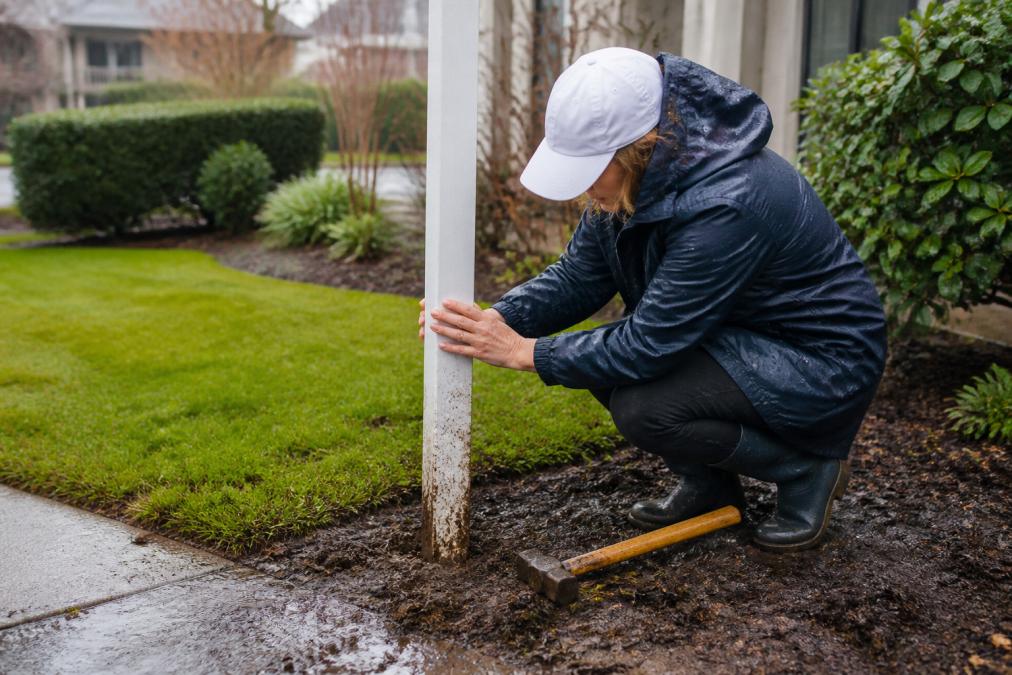
A few rules keep posts upright through the wet season:
- Drive H-stakes at least a third of their length into firm ground, deeper in soft soil.
- Backfill around the post and tamp it down rather than leaving an air gap.
- Face the sign so the prevailing wind hits the edge, not the full panel.
- Reset any post that leans after a storm before the soil sets around the wrong angle.
Metal-frames with weighted bases are the better choice where ground is too saturated to hold a stake at all. Sandbags on the base add stability without digging.
Most leaning signs aren’t a hardware failure. They’re an installation-depth problem that shows up only after the soil gets wet.
Hardware, Stakes, and Rust Prevention for Long-Term Durability
Rust is the slow killer of outdoor signage, and it almost always starts at the hardware. Steel stakes, bolts, and brackets corrode first because they sit in constant contact with wet ground and trapped moisture. In a climate with persistent rain and high humidity, unprotected carbon steel can show surface rust within weeks, and a fastener that loses a third of its cross-section will snap under a wind gust long before the panel itself fails.
The fix is to match the hardware to the exposure. Here is what actually holds up:
- Hot-dip galvanized (HDG) stakes and brackets. The zinc coating is metallurgically bonded and sacrificial, meaning it corrodes in place of the steel underneath. HDG fasteners typically outlast painted or electroplated hardware by a wide margin in wet ground contact.
- Stainless steel fasteners (304 or 316). Type 316 is the better choice within a few miles of saltwater or in areas with heavy road-salt exposure. Type 304 is adequate for inland installations.
- Coated or powder-coated frames. Powder coating resists chipping better than liquid paint, but any scratch exposes bare metal. Touch up chips immediately with a matching touch-up paint.
- Isolating washers and nylon bushings. These separate dissimilar metals at the contact point and stop galvanic corrosion before it starts.
A common mistake is mixing metals. Pairing a steel stake with an aluminum frame creates a galvanic reaction that speeds corrosion at the contact point, especially when a film of rainwater bridges the two. Stick to one metal family, or use isolating washers where they meet.
When you buy stakes, ask for the coating spec, not just “galvanized.” Electroplated zinc is measured in microns and wears through fast; hot-dip coatings are measured in mils and last for years in wet soil.
For long-term installations, inspect brackets and fasteners at least twice a year, and again after any storm with sustained gusts. A rusted bolt that snaps in a storm takes the whole sign down with it, and replacing a bracket is far cheaper than replacing a panel. Keep a small supply of spare HDG or stainless fasteners in the truck so a corroded bolt gets swapped the same day it is spotted.
One regional note: in the Pacific Northwest, moss and algae growth on shaded hardware traps moisture against the metal and accelerates corrosion. A quick scrub with a soft brush and mild soap during seasonal cleaning removes the organic layer and lets the hardware dry between rain events.
Winter-Proofing and Snow Management for Real Estate Signs
Snow rarely breaks a sign directly. What breaks it is the weight of piled snow, the freeze-thaw cycle that loosens the ground underneath, and rain-on-snow events that turn a light dusting into heavy, water-laden slush. In the Pacific Northwest, the bigger risk is often not deep snow but repeated cycles of wet snow, rain, and overnight refreeze that heave posts and pry panels apart.
Understanding the mechanism helps you prioritize. A cubic foot of dry snow weighs roughly 5 to 10 pounds (weather.gov). The same volume of wet, compacted snow can weigh 20 pounds or more (weather.gov). A standard coroplast panel presents several square feet of surface area to the sky, so a heavy wet snow can load a sign with more weight than the panel and stake were designed to carry. Add wind pushing against that loaded panel, and the failure point is usually the stake or the bracket, not the sign face.
Before the first freeze:
- Clear snow-berms away from the base so meltwater drains instead of pooling. Standing water that refreezes overnight is what heaves a post out of the ground.
- Remove or lower any sign that won’t be actively used through the winter. A sign that is not selling anything is just a wind sail.
- Check that the panel is secured against wind-resistance loads, since a loose sign rattles itself apart. Tighten every fastener and replace any that show rust.
- Confirm the post is set deep enough to survive ground heave. In areas with repeated freeze-thaw, driving the stake deeper than the frost line is the only reliable protection.
- Apply a fresh coat of wax or a UV-protectant spray to the panel face. It sheds water and makes snow easier to knock off.
After a snowfall, knock accumulated snow off the top edge of the panel rather than letting it sit. Use a soft-bristled broom or a plastic snow rake, never a metal shovel that can scratch the coating. Ice that forms in seams expands and pries panels apart over a single season, so clearing snow before it refreezes is the single highest-value winter task.
Shoveling or plowing snow directly against a sign base packs it tight and traps moisture. That trapped water refreezes, heaves the post, and leaves you with a crooked sign by spring. Keep plowed snow at least a few feet back from any active sign.
A regional angle most guides miss: in the Northwest, moss and algae thrive on the shaded, damp side of a sign through winter. That organic layer holds moisture against the panel and hardware long after the snow melts. A seasonal scrub with mild soap and a soft brush, followed by a rinse and dry, removes the growth and lets the sign dry between storms. It is a five-minute task that adds years to a sign’s life.
DIY Repair Kits and Eco-Friendly Disposal of Damaged Signs
A small repair kit in the truck saves a trip and a replacement. Most common damage, a loose bracket, a chipped corner, a wobbly stake, can be fixed on site in minutes with the right supplies.
Build a kit with:
- Spare H-stakes and coated bolts in the sizes you use
- A small hammer and a multi-bit screwdriver
- Touch-up paint matched to your panel coating
- Zip ties and isolating washers for quick bracket fixes
- A soft cloth and mild soap for on-the-spot cleaning
When a sign is genuinely beyond repair, disposal matters. Coroplast and PVC are recyclable plastics, and many municipal recycling programs accept them, though you should check local rules first (the EPA). Aluminum panels have scrap value and are the easiest to recycle responsibly. Don’t toss damaged panels in general trash if your area offers plastic or metal recycling, since these materials take a long time to break down in a landfill.
Legal and HOA Compliance During Weather Events
Temporary signage rules don’t pause for storms, and a damaged or displaced sign can put you out of compliance without warning. Many jurisdictions limit how long a temporary sign may stand and where it can be placed, and homeowner association rules often add their own restrictions on top.
The practical move is to know your limits before the weather turns. If a storm knocks a sign into a setback or onto a neighbor’s property, fix it fast rather than waiting. A displaced sign that sits for days is the kind of thing that draws a complaint.
For permanent installations, check whether your local code requires permits for the sign type and size you’re using. Requirements vary by jurisdiction, so confirm the specifics with your local planning office rather than assuming. If you’re unsure what your HOA allows during a weather event, get the answer in writing before the season starts.
Weather will test every sign you put up, and the ones that survive are the ones someone planned for. Triton Sign handles that planning for you, from full-service design and fabrication to installation built for the conditions here. With over 30 years of combined experience and a track record of meeting tight deadlines and budgets, we can fabricate durable panels, build stable metal-frames, and install signage that holds up season after season. Contact us to get signage that stays upright, legible, and on-brand through the worst of the weather.
Frequently Asked Questions
How to weatherproof an outdoor sign?
Start with a weather-resistant material like coroplast or aluminum, then apply a UV-resistant clear coat to protect against fading. Seal any exposed edges and use stainless steel hardware to prevent rust. For post stability in wet soil, drive H-stakes deeper than standard depth and add gravel for drainage. Check signs after every major storm and reapply protective coatings annually.
How often should I clean my real estate signs?
In Northwest weather, clean your real estate signs every two to four weeks during rainy season. Use a soft cloth with mild soap and water, then dry immediately to prevent water spots. Check for moss or mildew growth on coroplast and PVC surfaces, especially in shaded areas. After windstorms, inspect for debris and clean any mud splatter from the sign face.
How do I keep sign posts stable in soft, wet soil?
Drive H-stakes at least 12 to 18 inches into the ground and angle them slightly away from prevailing winds. For very soft soil, use longer stakes or add a secondary support post. Pack gravel or crushed rock around the base to improve drainage. Sandbags placed over the stake base can add weight and stability during extended rainy periods.
What are the best ways to prevent fading on outdoor signage?
Choose UV-resistant inks and materials from the start. Apply a clear UV-protective spray every six to twelve months, especially before summer. Position signs to minimize direct sun exposure where possible. Vinyl and aluminum signs hold color longer than coroplast in harsh conditions. Replace signs showing significant fading, as reduced sign-visibility hurts your property marketing.