Table of Contents
- Quick Comparison: Top 5 Commercial Sign Contractors in Seattle
- How We Evaluated These Commercial Sign Contractors
- 1. Triton Sign: Full-Service Design, Fabrication, and Installation
- 2. Emerald City Signworks: Custom Fabrication for Complex Builds
- 3. Puget Sound Graphics: Fleet Wraps and Environmental Graphics
- 4. Cascade Sign & Lighting: Electrical Signage and LED Retrofitting
- 5. Rainier Signage Solutions: ADA Compliance and Wayfinding Systems
- Navigating the Commercial Sign Permitting Process in Seattle
- Frequently Asked Questions
Last Updated: September 15, 2026
Quick Comparison: Top 5 Commercial Sign Contractors in Seattle
Finding the right commercial sign contractors in Seattle starts with knowing what each provider actually does well. The five firms below represent the strongest mix of fabrication capability, installation experience, and local permitting knowledge available in the region.
| Contractor | Best For | Core Services | Notable Strength |
|---|---|---|---|
| Triton Sign | Full-service turnkey projects | Design, fabrication, installation, ADA, neon, vehicle graphics | 30+ years combined experience |
| Emerald City Signworks | Complex custom builds | Custom fabrication, architectural signage | Intricate fabrication work |
| Puget Sound Graphics | Fleet and environmental work | Vehicle wraps, environmental graphics | Large-format printing |
| Cascade Sign & Lighting | Electrical and LED work | Electrical signage, LED retrofitting | Illuminated sign expertise |
| Rainier Signage Solutions | Compliance and wayfinding | ADA signage, wayfinding systems | Code-driven projects |
The right pick depends on your project type. A storefront refresh, a multi-site rebrand, and a fleet wrap program each demand different strengths. This guide from Triton Sign breaks down where each contractor fits, what they do best, and the permitting steps that apply to signage work in the city.
How We Evaluated These Commercial Sign Contractors
Each contractor was assessed against five criteria that matter most to project managers, facilities teams, and business owners: fabrication capability, installation quality, permitting support, project management, and range of services. Full-service providers that handle design through installation scored higher than shops that outsource stages.
We weighted local permitting experience heavily. Signage work in Seattle involves city permit requirements for signs, and contractors who routinely navigate that process save clients weeks of back-and-forth. Durability and weather resistance also counted, since outdoor signage here faces constant moisture.
The result is a practical shortlist, not a popularity contest. Each entry includes honest limitations, because no single contractor is right for every job.
1. Triton Sign: Full-Service Design, Fabrication, and Installation
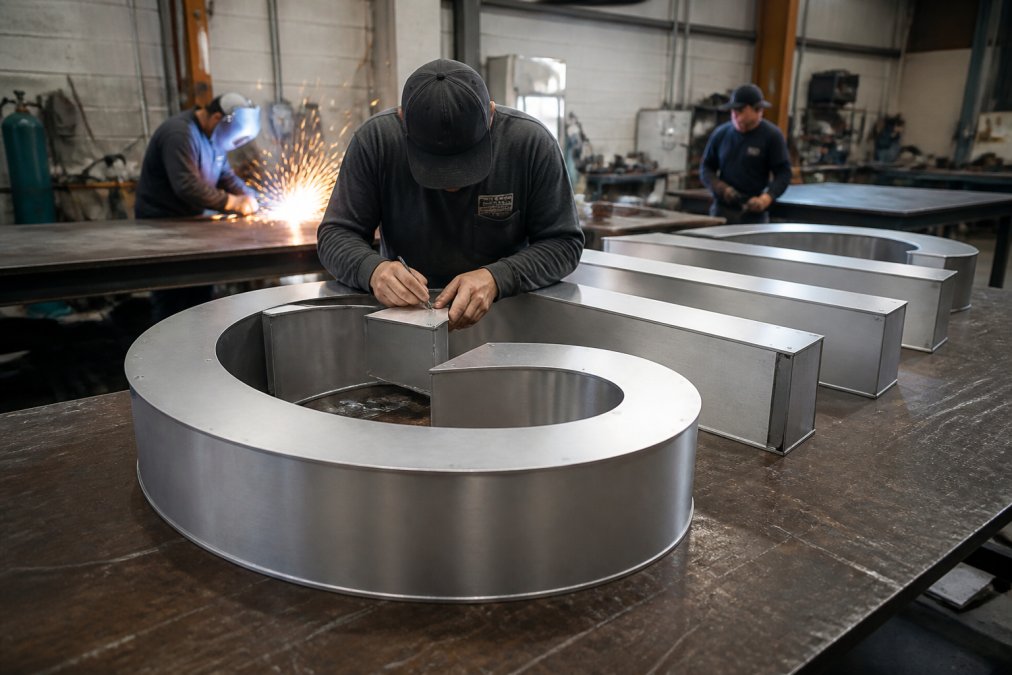
Triton Sign is a full-service signage provider offering design, fabrication, and installation under one roof. The company brings more than 30 years of combined industry experience to projects ranging from neon and ADA signage to living wall displays and vehicle graphics.
What sets Triton apart is the turnkey model. Clients work with one team from concept through final installation, which removes the coordination headaches that come with splitting a project across multiple vendors. For construction project managers juggling tight build schedules, that single point of contact matters.
Standout Strengths
- Full-service design, fabrication, and installation in one workflow
- Proven ability to meet project deadlines and budget constraints
- Specialized capabilities including neon, ADA, and living wall displays
- Consistent multi-location branding for regional rollouts
- Cost-effective display solutions for projects of varying scale
A single vendor handling design through installation eliminates the finger-pointing that happens when fabrication and installation are split across companies.
Limitations to Know
Triton’s breadth means it is not the cheapest option for a single small sign. Businesses wanting one basic panel may find a narrower shop more economical. Pricing depends on project scope, materials, and quantities, so request a quote rather than assuming a flat rate.
2. Emerald City Signworks: Custom Fabrication for Complex Builds
Emerald City Signworks focuses on custom fabrication for projects that demand intricate work. Dimensional lettering, architectural signage, and one-off builds are where this shop performs best.
If your project involves unusual materials, custom shapes, or a design that off-the-shelf products cannot deliver, a fabrication-first shop is the right call. Expect longer lead times than a standard panel order, because custom work takes planning and machining time.
Custom fabrication timelines can stretch when design files are incomplete. Submit production-ready artwork early or you risk pushing your installation date past your opening.
3. Puget Sound Graphics: Fleet Wraps and Environmental Graphics
Puget Sound Graphics specializes in vehicle wraps and environmental graphics, including large format printing for interior and exterior brand applications. Fleets, retail interiors, and office environments are its core territory.
Vehicle wraps deserve special attention here. A poorly applied wrap peels at the edges and looks worse than no wrap at all. Ask any wrap provider about their installation process, material warranties, and how they handle curved panels before you commit.
4. Cascade Sign & Lighting: Electrical Signage and LED Retrofitting
Cascade Sign & Lighting handles electrical signage and LED retrofitting for businesses upgrading older illuminated signs. Retrofitting an existing sign to LED reduces ongoing energy use and often improves brightness consistency (LED Adoption Report).
Electrical signage requires licensed work and inspection, so confirm the contractor coordinates permits and inspections on your behalf. A shop that leaves electrical permitting to you adds a step to your project timeline.
5. Rainier Signage Solutions: ADA Compliance and Wayfinding Systems
Rainier Signage Solutions concentrates on ADA compliant sign installation and wayfinding systems for offices, healthcare facilities, and multi-building campuses. Compliance work demands precision, since placement, mounting height, and tactile elements follow specific standards rather than design preference.
The ADA Standards for Accessible Design set the requirements for tactile characters, braille, and mounting heights. A contractor experienced in this work will guide you through what your facility actually needs rather than handing you a spec sheet. For a hospital, a school, or a multi-tenant office, the practical scope usually includes permanent room signs, directional signs at decision points, and exterior wayfinding that connects parking to entrances.
A Maintenance and Repair Checklist Most Contractors Do Not Give You
Signage is not a one-time purchase. Illuminated signs dim, wraps peel, and exterior finishes weather. The single most useful thing a business owner can do is put signage on a maintenance schedule instead of waiting for a failure. The checklist below is the one most contractors never hand over.
Monthly
- Walk the exterior at night and note any channel letters, lamps, or LED modules that are out or flickering
- Check for water intrusion around sign cabinets after heavy rain
- Look for peeling edges, lifting vinyl, or cracked acrylic on wall signs and wraps
Quarterly
- Inspect mounting hardware and anchors for corrosion or loosening
- Clean illuminated sign faces to maintain brightness and legibility
- Verify that ADA signs in public areas are still present, unobstructed, and correctly mounted
Annually
- Have a contractor inspect electrical connections, transformers, and LED drivers on illuminated signs
- Re-seal any penetrations where water can enter the building envelope
- Review wayfinding against any changes in floor plans, tenant mix, or campus layout
A single failed LED driver can take an entire channel-letter sign dark. Replacing drivers on a scheduled basis is almost always cheaper than an emergency service call plus a dark storefront during business hours.
Why This Matters for ROI
A dark or damaged sign does more than look bad. It signals to customers that the business may be closed or struggling, and it removes the single most visible brand asset a storefront has. Proactive maintenance extends the working life of a sign, protects the investment you already made, and avoids the rush fees that come with emergency repairs. For multi-location operators, a shared maintenance calendar across sites is the cheapest form of brand protection available.
Where Rainier Fits
Rainier is the right call when your project is compliance-driven or wayfinding-heavy: a new healthcare build, a campus re-sign, or a facility that needs an ADA audit before an inspection. If your project is a single storefront sign or a fleet wrap, a different contractor on this list will usually be a better fit.
Navigating the Commercial Sign Permitting Process in Seattle
Most sign contractors mention permits. Very few explain how the process actually works in this city, which is why sign projects stall here more often than at the fabrication stage. The section below is a practical guide to what reviewers look for, which approvals apply to which properties, and how long each step typically takes.
Which Permit Path Applies to Your Sign
The first fork in the road is whether your sign is on private property or in the public right-of-way.
What Reviewers Actually Look At
Typical Timeline
Bring your contractor into the permitting conversation before design is finalized. Firms that file sign permits regularly know which drawings reviewers flag in your specific zone, and catching those issues before submission can save a full review cycle.
A Pre-Submittal Checklist
Where Contractors Save You Time
Frequently Asked Questions
What should I look for when hiring a commercial sign contractor?
Look for a contractor with a proven portfolio in your sign type, whether that’s channel letters, monument signs, or vehicle wraps. Verify they handle permitting, carry proper insurance, and offer a written warranty on installation and materials. Ask about their process for meeting deadlines on construction projects, and confirm they can provide references from similar-sized businesses. A full-service provider that manages design, fabrication, and installation under one roof reduces coordination headaches.
How much do custom commercial signs cost?
The cost of commercial storefront signs depends on size, materials, illumination, and installation complexity. A simple vinyl graphic costs far less than a custom-fabricated illuminated monument sign. Pricing also varies based on permit fees, electrical work, and whether structural reinforcement is needed. Request itemized quotes from multiple contractors so you can compare labor, materials, and permit handling. Most contractors provide a free consultation to scope your project before quoting.
Do commercial sign contractors handle ADA compliance?
Yes, reputable contractors handle ADA compliant sign installation as part of their service. This includes interior wayfinding signs, restroom signs, and directional signage that meet federal accessibility standards. Contractors should know the rules for tactile lettering, braille, mounting height, and contrast requirements. Ask whether they coordinate with your architect or facilities team to ensure every sign meets code before installation. Getting this wrong can mean costly rework and failed inspections.
Are permits required for commercial signs?
Most commercial signs require a permit before installation. The commercial sign permitting process involves submitting design drawings, site plans, and sometimes structural calculations to your local planning department. Requirements vary by jurisdiction and sign type. Illuminated signs, large monument signs, and signs in historic districts typically face stricter review. A contractor experienced with local zoning regulations can manage the application, track approvals, and schedule installation once the permit is issued.