Last Updated: October 26, 2026
Quick Summary
The best vinyl for vehicle wraps starts with film construction: cast vinyl conforms to curves, rivets, and recesses, while calendared vinyl suits flat panels and simple curves at a lower cost. Match the film to your vehicle’s body shape, then compare published data sheets and warranties before choosing a brand.
- Cast vinyl holds its shape on curves; calendared vinyl resists stretching and can lift at edges.
- Gloss is the easiest finish to maintain; matte and satin need pH-neutral soap and no polishing.
- Cast films are typically rated five to seven years on vertical surfaces and three to five on horizontal ones.
- Confirm air-release channels, repositionable adhesive, and low initial tack before buying film.
- Quality cast films come off cleanly within their rated lifespan; cheap film can leave adhesive or pull paint.
Table of Contents
- Start With Film Construction: Cast vs. Calendered Vinyl Wrap
- Match the Vinyl to Your Vehicle’s Body Shape and Contours
- Pick a Vehicle Wrap Finish: Gloss, Matte, Satin, and More
- Compare the Best Vinyl Wrap Brands Before You Buy
- Understand Vehicle Wrap Vinyl Lifespan and Durability
- Check Adhesive, Air-Release Channels, and Repositionability
- Weigh Paint Condition, Removal, and Warranty Before You Commit
- Get a Wrap Recommendation From Triton Sign
- Frequently Asked Questions
Start With Film Construction: Cast vs. Calendered Vinyl Wrap
The best vinyl for vehicle wraps starts with film construction, not color. You have two real options: cast vinyl and calendared vinyl. Cast film is poured onto a liner and cures flat, so it holds its shape and stretches around curves without springing back. Calendared film is squeezed through rollers, which leaves built-in tension and limits how far it will stretch.
That difference decides almost everything downstream. A cast film conforms to deep recesses, rivets, and bumper shapes. A calendared film handles flat panels and simple curves well and costs less.
How Cast and Calendered Film Behave on Curves
Cast vinyl stretches and stays where you put it. Calendared vinyl resists stretching and wants to pull back, so it lifts at edges over time. On a flat trailer panel, you will never notice. On a curved fender or a mirror housing, the difference shows up within a season. If your vehicle has complex surfaces, cast film is the safer choice.
Match the Vinyl to Your Vehicle’s Body Shape and Contours
Vehicle body shape should drive your film choice before brand or color enters the conversation. A box truck is mostly flat panels: easy to wrap, forgiving of cheaper film, and quick to install.
Walk around your vehicle with a notepad and mark every surface that bends in two directions at once. For a look at how fleet wraps are planned across varied vehicle types, see the fleet branding guide. Those are your trouble spots.
Pick a Vehicle Wrap Finish: Gloss, Matte, Satin, and More
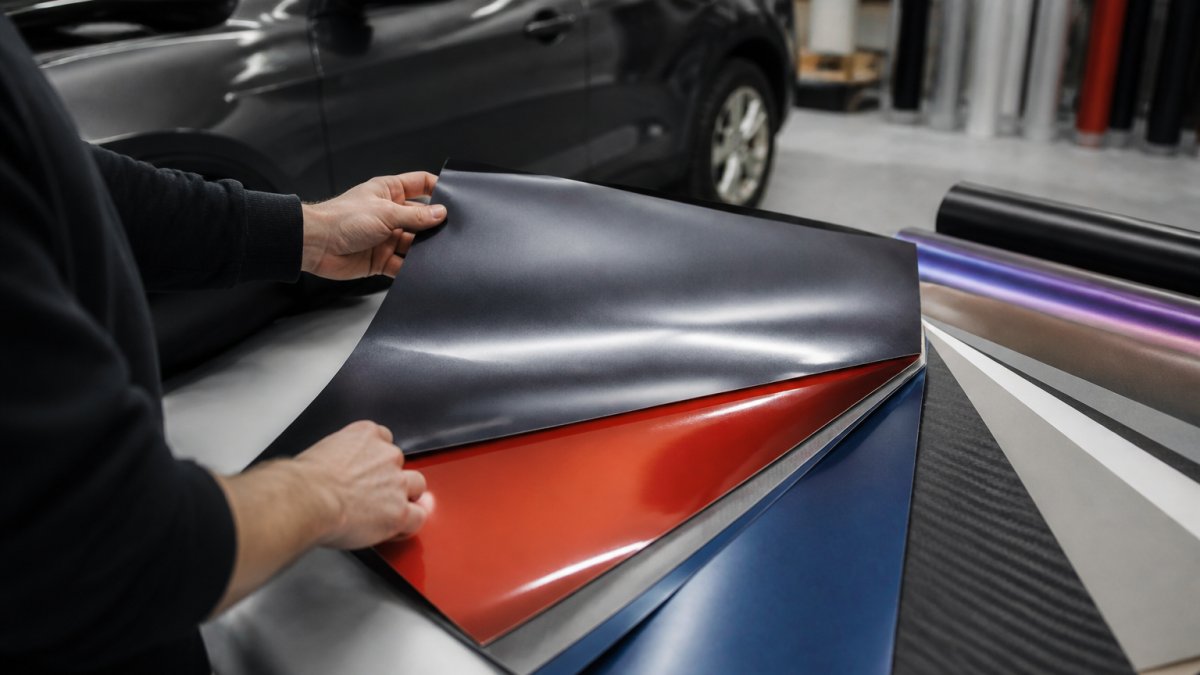
Vehicle wrap finishes fall into four practical groups, and each one changes how your brand reads on the road. Gloss mimics factory paint and reflects light, so colors look bright and deep. Matte absorbs light for a flat, understated look that hides small surface flaws. Satin sits between the two with a soft sheen. Textured and specialty films add carbon-fiber or brushed-metal effects but cost more and limit color options.
Finish also affects how long the wrap stays clean-looking. Gloss shows swirl marks and water spots. Matte hides them but cannot be polished, so a scuff stays a scuff. For fleet branding, gloss usually wins on durability and ease of care. Readers weighing finish choices can find design guidance on how finish and graphics work together for a small business wrap.
Which Finish Is Easiest to Maintain
Gloss is the easiest finish to maintain. You can wash it like paint and lightly polish minor marks. Matte and satin need pH-neutral soap, soft cloths, and no polishing at all. If your vehicles sit outside or run high miles, pick gloss and save yourself the upkeep.
Compare the Best Vinyl Wrap Brands Before You Buy
Best vinyl wrap brands earn that label on consistency, not marketing. The major manufacturers, 3M, Avery Dennison, Oracal, KPMF, Hexis, and Arlon, all publish technical data sheets listing film thickness, stretch rate, adhesive type, and expected outdoor life. Compare those sheets side by side rather than comparing colors on a screen.
Here is how the major brands typically position themselves, based on their published data sheets and common installer feedback:
- 3M: Its 2080 series cast films are the industry benchmark for conformability and color consistency. The trade-off is price, 3M sits at the top of the market, and some installers find its adhesive more aggressive on first contact, which punishes beginners.
- Avery Dennison: Its SW900 cast line is a direct competitor to 3M 2080, with a slightly lower price point and a reputation for easier repositioning. Color matching across production lots is generally strong, but some installers report more variation in matte finishes than gloss.
- Oracal: Its 970RA cast series is a popular value option, cast construction at a calendared-adjacent price. It conforms well but has a narrower color palette than 3M or Avery, and its warranty terms are less generous on horizontal surfaces.
- KPMF and Hexis: Both offer cast films with strong conformability and specialty finishes (color-shift, textured) that the bigger brands do not always stock. Availability can be spotty, and installer experience varies more by region.
- Arlon: Its cast films are well regarded for fleet work, with good color consistency across large orders and a warranty that covers vertical and horizontal surfaces separately.
Ask three questions of any film you consider:
- Does the data sheet state a stretch percentage and a recommended application temperature?
- Does the film use air-release channels and a repositionable adhesive?
- Does the warranty cover vertical and horizontal surfaces separately?
A common mistake is buying on color alone. The shade you love means nothing if the film cracks at two years or lifts on every rivet. Buyers comparing materials for a multi-vehicle purchase can see how cohesive branding holds across diverse vehicle types.
When comparing brands, weigh the warranty against the price difference. A film that costs 20% less but carries a two-year shorter warranty on horizontal surfaces may cost more per year of service life.
Here is how the major brands stack up based on their published data sheets and installer feedback.
| Brand | Line | Key difference |
|---|---|---|
| 3M | 2080 cast series | Industry benchmark for conformability; top-of-market price |
| Avery Dennison | SW900 cast line | Slightly lower price; easier repositioning |
| Oracal | 970RA cast series | Value cast option; narrower color palette |
| KPMF and Hexis | Cast films | Specialty finishes; availability can be spotty |
| Arlon | Cast films | Well regarded for fleet work; separate surface warranties |
Understand Vehicle Wrap Vinyl Lifespan and Durability
Vehicle wrap vinyl lifespan runs from roughly three to seven years depending on film quality, sun exposure, and care. Cast films with quality laminate sit at the top of that range. Calendared films on flat surfaces land in the middle. Horizontal surfaces like roofs and hoods age fastest because they take direct UV exposure all day.
Most manufacturers rate their cast films for five to seven years on vertical surfaces and three to five years on horizontal surfaces when the film is laminated and the vehicle is parked outdoors. Those ratings assume proper installation and routine care. Real-world results vary widely based on four factors:
- Film quality: cast outperforms calendared over time. A cast film with a quality cast laminate is the only combination that reliably reaches the top of the range on a full wrap.
- Lamination: a UV laminate protects color and adds years. Unlaminated film, sometimes used on flat panels to save cost, fades and chalks much faster and is not suitable for a full wrap.
- Sun exposure: parked indoors doubles usable life. A garage-kept vehicle in a mild climate can see seven or more years from a quality cast film; the same film on a vehicle parked outside in a high-UV climate may need replacement in four.
- Care: hand washing beats automatic brushes every time. Automatic brush washes abrade the film surface and can lift edges; touchless washes are gentler but still use stronger chemicals than hand washing.
Climate matters more than most buyers expect. In hot, high-UV regions, horizontal surfaces can degrade a year or more sooner than the manufacturer’s vertical-surface rating. In cold climates, the risk shifts to edge lifting and cracking during freeze-thaw cycles, especially on films that were installed below the recommended application temperature.
Weather resistance matters in wet climates. Readers concerned with durability and visibility can compare reflective vinyl options that extend nighttime performance. Film edges that lift let moisture underneath, and moisture plus sun equals peeling. Seal edges on high-wear panels and inspect them twice a year.
Do not pressure-wash wrap edges or use a high-pressure nozzle within a foot of the film. Forced water under lifted edges is one of the most common causes of premature failure, and it is rarely covered by warranty.
Check Adhesive, Air-Release Channels, and Repositionability
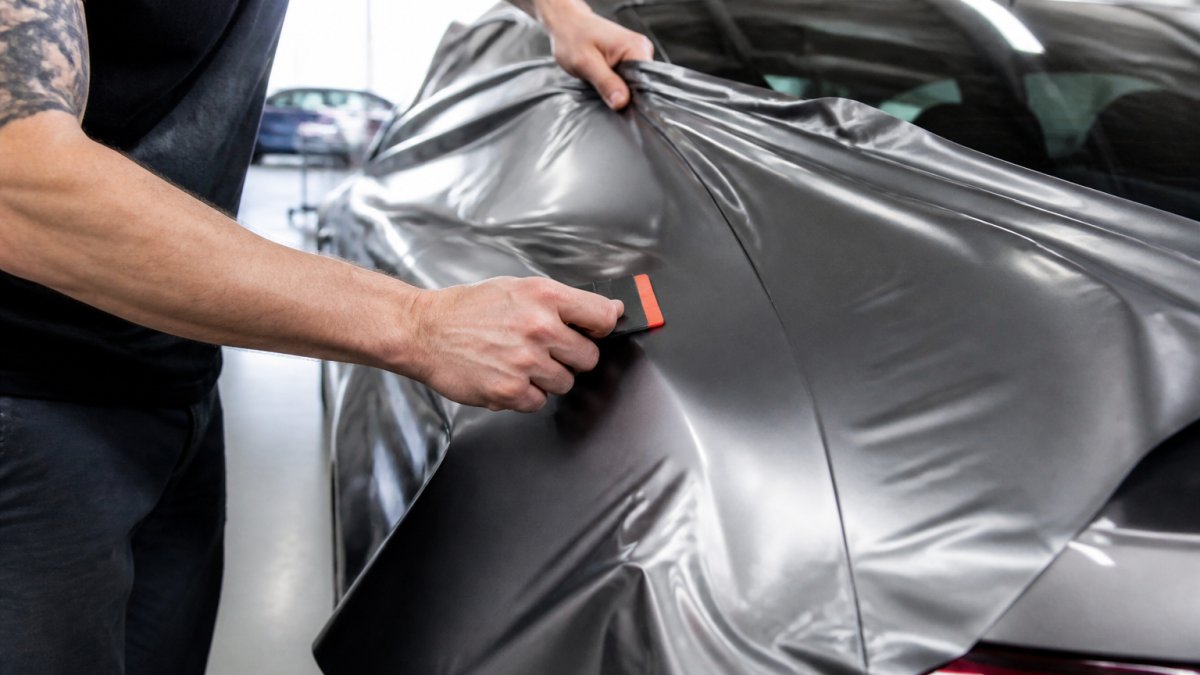
Adhesive technology decides whether an install goes smoothly or turns into a fight. Air-release channels are tiny grooves in the adhesive that let trapped air escape under the squeegee. Without them, every bubble becomes a puncture.
Three adhesive details to confirm before you buy:
- Air-release channels: present on quality films, absent on cheap ones
- Repositionable adhesive: lets you reset without stretching the film
- Initial tack: low-tack films are forgiving; high-tack films grab fast and punish mistakes
DIY installation is realistic on flat panels with a repositionable film. Curved surfaces, deep recesses, and full wraps are a different job. A professional installer brings heat control, squeegee technique, and the experience to avoid stretch marks. On a fleet, one botched panel costs more than the labor you saved.
Weigh Paint Condition, Removal, and Warranty Before You Commit
Paint condition decides whether a wrap is even an option. Film needs a clean, smooth, fully cured surface. Fresh paint needs time to outgas before any vinyl goes on.
Removal deserves equal thought. Quality cast films come off cleanly within their rated lifespan. Cheap film or film left on too long can leave adhesive behind or pull paint on removal.
Warranty terms vary widely. Read what is covered: cracking, lifting, fading, and adhesive failure are separate items. Confirm whether the warranty covers installation labor or film only. Get the terms in writing before you commit.
Get a Wrap Recommendation From Triton Sign
Choosing the best vinyl for vehicle wraps comes down to four inputs: your vehicle shape, your finish preference, your intended lifespan, and who installs it. Get those right and the brand decision becomes simple. Get them wrong and no film on the market will save the job.
At Triton Sign, we have over 30 years of combined sign and display experience. Our team provides design, fabrication, and installation services. We meet tight project deadlines. If you are weighing options for a fleet or a single vehicle, contact us.
Frequently Asked Questions
What is the difference between cast and calendered vinyl wrap?
Cast vinyl is poured onto a liner as a liquid, so it has no built-in memory and stretches easily around curves and rivets. Calendered vinyl is pressed between rollers, which leaves stress in the film and makes it spring back on complex surfaces. Cast costs more but conforms better and generally lasts longer on a full vehicle wrap. Calendered film suits flat panels, simple accent wraps, and budget projects where the surface is mostly flat.
How long does vehicle wrap vinyl typically last?
Lifespan depends on film type, finish, sun exposure, and care. Cast films generally outlast calendered films, and horizontal surfaces like hoods and roofs age faster than vertical panels because of direct UV exposure. Matte and satin finishes tend to show wear sooner than gloss. Washing regularly with mild soap, parking in shade when possible, and avoiding abrasive brushes all extend the life of your vehicle wraps.
Which vinyl wrap finish is easiest to maintain?
Gloss finishes are the most forgiving. They hide light swirl marks, wipe clean easily, and can take a spray wax. Matte and satin finishes look sharp but show fingerprints and smudges, and they cannot be polished or waxed without turning shiny. If the vehicle sits outside or gets washed often, gloss saves effort. For fleet vehicle wraps that need consistent branding across many units, gloss also photographs and reads more uniformly.
What vinyl wrap do professionals use for fleet vehicles?
Most professional installers reach for cast films from established wrap brands because cast vinyl conforms to complex body contours and holds up under UV exposure. For fleets, installers also check adhesive type and air-release channels, since those affect repositionability during installation and how cleanly the film removes years later. Triton Sign can recommend a film and finish that keeps every unit in your fleet looking consistent.
