Table of Contents
- Why Reflective Materials Matter for Real Estate Signs
- How Real Estate Sign Visibility at Night Drives Property Exposure
- Understanding Reflective Sheeting for Signs
- Reflective vs. Nonreflective Signs: What Buyers Actually See
- Real Estate Sign Materials: Selecting the Right Option
- Safety and Compliance Benefits
- Total Cost of Ownership and Long-Term Value
- Frequently Asked Questions
Last Updated: October 6, 2026
Why Reflective Materials Matter for Real Estate Signs
When a potential buyer drives past your property at dusk or after dark, they won’t see a traditional sign. They’ll see a dark rectangle against an even darker landscape. That’s the moment you lose visibility, and lose a sale. This is where reflective materials realty signs make the difference. At Triton Sign, we’ve designed and installed hundreds of real estate signs across the region, and the ones that capture attention after sunset consistently outperform their nonreflective counterparts in both visibility and conversion.
Reflective materials work by bouncing light directly back to its source. When a vehicle’s headlights hit a reflective sign, the retroreflective surface returns that light to the driver’s eyes, making the sign appear to glow. A nonreflective sign absorbs that same light and disappears into the darkness. For real estate, this isn’t a minor aesthetic advantage, it’s the difference between a property that stays hidden and one that gets noticed during the critical evening hours when many buyers are driving through neighborhoods.
The practical benefit is immediate: a reflective real estate sign remains visible and legible from a greater distance at night, while standard signs fade into invisibility. That extended visibility window means more drive-by traffic, more open-house visits, and more qualified leads.
How Real Estate Sign Visibility at Night Drives Property Exposure
Nighttime visibility directly impacts buyer behavior. Most real estate traffic occurs during evening hours when professionals finish work and explore neighborhoods. A sign that disappears after dark misses this entire window of opportunity.
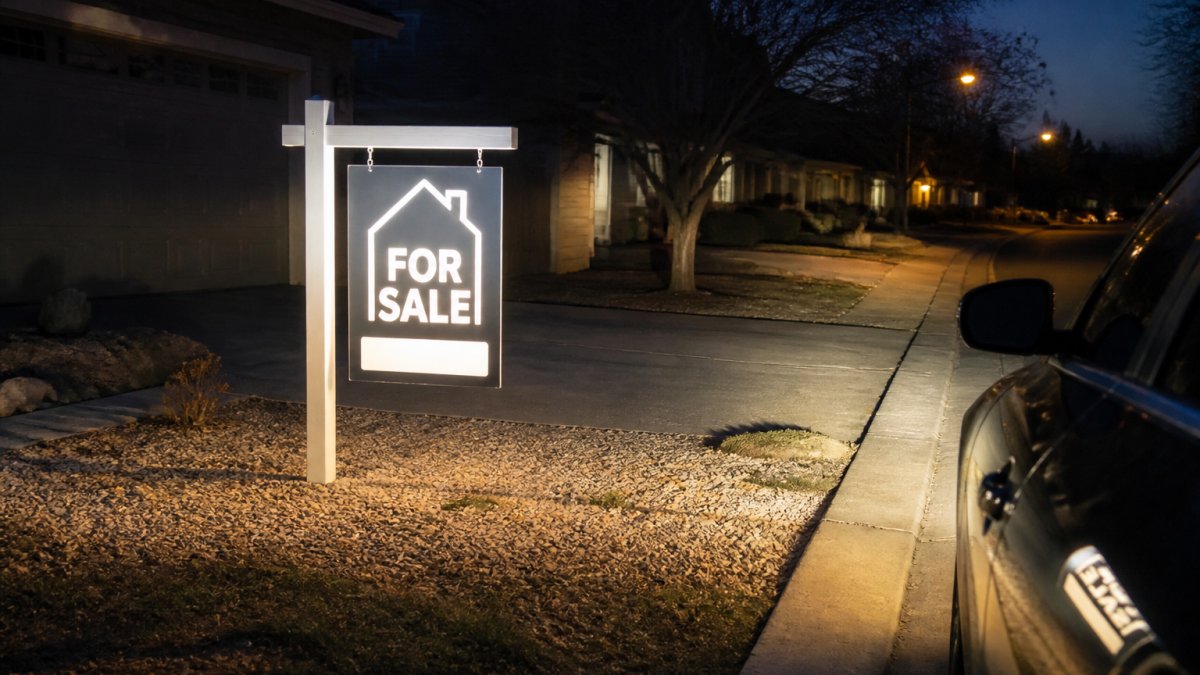
Reflective sheeting for signs ensures your property remains discoverable during these critical hours. The retroreflective technology creates a visible beacon that guides buyers directly to your listing. Studies on pedestrian and driver safety consistently show that reflective materials increase detection distance compared to standard painted or matte surfaces. For real estate signage, this translates to more people seeing your address, more GPS searches for your property, and higher foot traffic at open houses.
The legibility factor matters equally. A reflective sign doesn’t just appear brighter, it maintains contrast and readability even when viewed from an angle or at high speed. A buyer passing your property at 30 mph can read a reflective sign clearly. They’ll miss a standard sign entirely. This visibility advantage compounds when you consider that many neighborhoods restrict sign size and placement, making every inch of visibility critical.
The sign becomes a consistent lead generator rather than a static marker that only works during daylight hours.
Understanding Reflective Sheeting for Signs
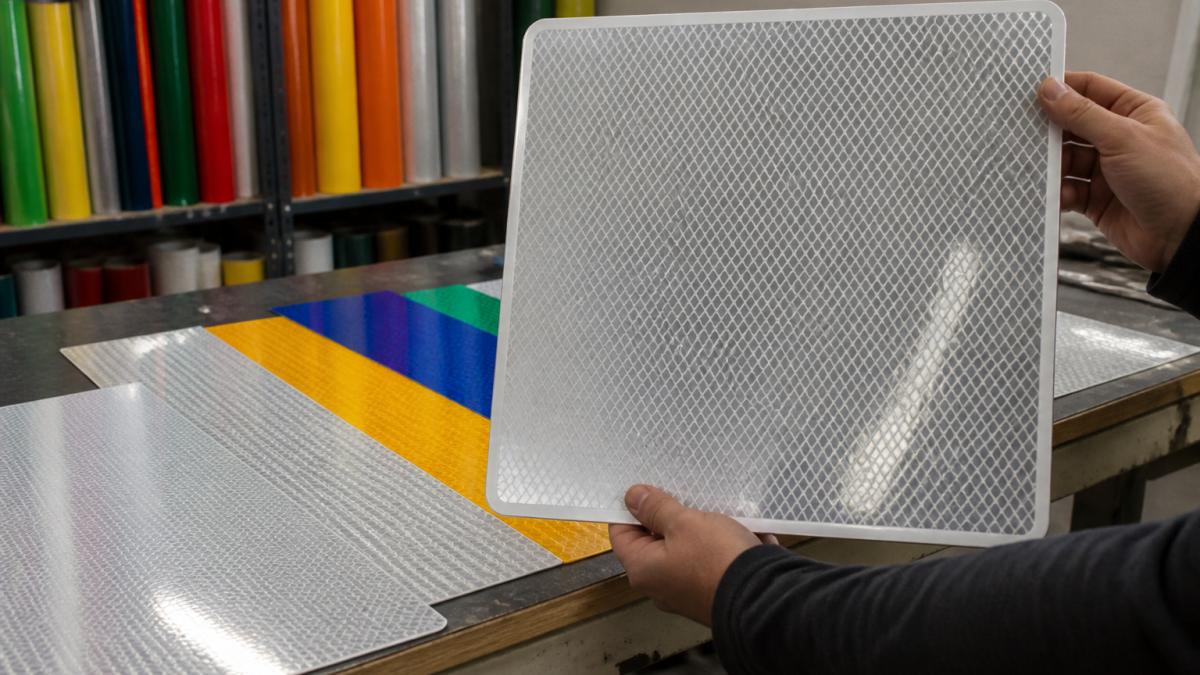
Reflective sheeting is a specialized material engineered to return light to its source through a process called retroreflection. The surface contains thousands of tiny glass beads or prisms embedded in a reflective adhesive backing. When light enters these beads at any angle, it bounces back toward the light source, whether that’s a vehicle headlight, flashlight, or street lamp.
The material comes in several grades, each with different performance characteristics and durability ratings. Understanding these grades helps you select the right option for your specific real estate application and local climate conditions.
Retroreflective Material Grades and Performance
Reflective materials for signs are classified into grades based on their retroreflective brightness and durability. Grade 1 (Encapsulated Lens) offers basic reflectivity suitable for temporary signage and low-traffic areas. Grade 2 (Enclosed Lens) provides superior performance and longer lifespan, making it the standard choice for most commercial and real estate applications. Grade 3 (Microprismatic) delivers maximum brightness and is designed for high-speed traffic areas and premium applications where visibility must be exceptional.
For real estate signage, Grade 2 typically delivers the best balance of performance and cost-effectiveness. It maintains consistent reflectivity for 5-7 years in outdoor conditions and handles the temperature fluctuations and moisture exposure common in most climates. Grade 3 materials last longer and perform better in challenging visibility conditions, making them ideal if your property is in a high-traffic area or competes with dense signage.
The difference in performance is measurable. A Grade 2 reflective sign will be visible and readable from a greater distance at night. The same sign in Grade 3 material remains legible from an even greater distance. For properties on busy roads or in competitive markets, that additional visibility distance justifies the premium cost.
Durability and Weather Resistance
Reflective vinyl and aluminum combinations form the backbone of durable real estate signage. The reflective vinyl provides the retroreflective surface, while the aluminum substrate offers structural support and weather resistance. This pairing withstands rain, snow, UV exposure, and temperature cycling without degrading.
Weather resistance matters because reflective materials exposed to harsh conditions lose brightness over time. Moisture penetration, UV degradation, and thermal stress all reduce retroreflective performance. Quality reflective sheeting uses sealed construction and UV-stabilized adhesives to resist these factors.
Aluminum backing resists rust and corrosion, maintaining structural integrity through multiple seasons. Vinyl-coated aluminum combines the reflective properties of the sheeting with the durability of metal, creating signage that performs consistently regardless of weather. In regions with challenging weather conditions, this combination offers superior durability.
Proper installation and maintenance extend the lifespan further. Signs mounted away from direct water runoff and cleaned periodically maintain their reflective brightness and readability throughout their service life.
Reflective vs. Nonreflective Signs: What Buyers Actually See
The visual difference between reflective and nonreflective real estate signs becomes stark at night. A traditional painted sign with matte finish absorbs light and becomes nearly invisible after sunset. The same property with a reflective sign stands out clearly, visible from a distance, readable at speed.
During daylight hours, both sign types perform adequately. The real estate sign materials distinction emerges once ambient light drops. A buyer driving through a neighborhood at 7 p.m. in winter sees reflective signs clearly but drives past nonreflective ones without noticing. This visibility gap directly impacts which properties get inquiries and which sit unshown.
Reflective materials also improve daytime performance by creating higher contrast between lettering and background. The bright white or yellow reflective surface makes text more legible and the sign more noticeable, even in daylight. Nonreflective signs rely on paint color and contrast alone, which fades with UV exposure and weather.
The sign becomes a visibility advantage that compounds throughout the listing period.
Real Estate Sign Materials: Selecting the Right Option
Choosing between reflective vinyl and aluminum, acrylic alternatives, and other materials requires understanding the trade-offs between visibility, durability, cost, and maintenance.
Reflective Vinyl and Aluminum Combinations
Reflective vinyl bonded to aluminum backing creates the industry standard for real estate signage. The vinyl provides superior retroreflection and brightness, while the aluminum offers strength, weather resistance, and longevity. This combination handles temperature cycling, moisture exposure, and UV radiation without losing performance.
Aluminum backing comes in different gauges, with thicker material providing greater rigidity and resistance to denting or warping. A 0.063-inch aluminum substrate balances durability with weight, making installation straightforward while ensuring the sign maintains its shape through multiple seasons. Thinner aluminum saves cost but sacrifices durability in areas prone to wind, snow load, or physical impact.
Reflective vinyl adhesive quality matters significantly. Premium vinyl uses polyester backing and solvent-resistant adhesives that resist moisture penetration and maintain bond integrity. Budget vinyl may show edge-lifting or delamination within a year, particularly in humid climates or when exposed to direct water runoff.
Acrylic and Plexiglass Alternatives
Acrylic and plexiglass offer different performance characteristics compared to reflective vinyl. Acrylic provides good light transmission and can be printed or painted, allowing custom graphics and color combinations. Plexiglass offers superior impact resistance and clarity, making it suitable for three-dimensional dimensional sign designs.
Neither acrylic nor plexiglass provides inherent retroreflection. To achieve reflective performance, these materials must be backed with reflective vinyl or paint, adding complexity and cost. The result often underperforms compared to direct reflective vinyl on aluminum, particularly in terms of brightness and viewing angle performance.
Acrylic works well for signs where custom graphics or unique shapes are priorities and nighttime visibility is secondary. Plexiglass suits applications where impact resistance matters, such as signs in high-traffic pedestrian areas. For standard real estate signage where nighttime visibility drives performance, reflective vinyl and aluminum combinations deliver superior results at lower cost.
Safety and Compliance Benefits
Reflective materials improve safety for drivers, pedestrians, and property visitors. Increased sign visibility reduces accidents by making hazards, directional information, and property boundaries clear even in low-light conditions. This safety benefit extends to the property itself, visitors can navigate driveways and entry points safely when signs clearly mark access routes and parking areas.
Local sign ordinances often reference visibility and reflectivity standards, particularly for properties on major roads or in commercial zones. Reflective materials help ensure compliance with these regulations, avoiding costly modifications or removal orders. Some jurisdictions require reflective signage for real estate signs in specific areas, making reflective materials a compliance requirement rather than an option.
The liability protection is real. A clearly visible reflective sign reduces the risk of accidents or injuries related to property access or identification. Insurance providers often view reflective signage favorably as a risk-mitigation measure, potentially affecting coverage terms.
Total Cost of Ownership and Long-Term Value
The upfront cost of reflective materials may exceed standard painted signs. However, total cost of ownership, factoring in lifespan, replacement frequency, and performance benefits, favors reflective options significantly.
A standard nonreflective sign typically requires replacement more frequently due to fading, weather damage, or obsolescence. A reflective vinyl and aluminum sign maintains performance for a longer period with minimal maintenance. Over a decade, you’ll replace a standard sign more often than a reflective sign.
The performance benefit compounds the financial advantage. Properties with reflective signage can potentially sell faster, offsetting the sign’s cost through reduced carrying costs and faster transaction completion. A property that sits on the market longer can incur additional costs.
For property managers maintaining multiple locations, reflective materials ensure consistent visibility and branding across all properties. Triton Sign helps operations managers and facilities teams standardize on reflective materials, reducing replacement cycles and maintenance burden while improving property visibility across their portfolio.
The decision ultimately hinges on visibility requirements and intended sign lifespan. For real estate applications where nighttime visibility drives buyer traffic and property exposure, reflective materials deliver measurable return on investment through faster sales, higher traffic, and extended sign life. The upfront cost premium is recouped through performance benefits within the first listing period.
Reflective materials for realty signs transform how properties are discovered and marketed after dark. The visibility advantage directly impacts buyer behavior, open-house attendance, and ultimately, sale timelines. When you’re competing for attention in a crowded market, a sign that remains visible and legible at night becomes a consistent asset rather than a daylight-only marker.
Frequently Asked Questions
What are the benefits of reflective materials on realty signs?
Reflective materials on realty signs increase visibility during evening and nighttime hours when vehicle headlights illuminate them, extending your property’s exposure window. They improve legibility at greater distances, enhance safety for drivers and pedestrians, and reduce replacement frequency due to superior durability and weather resistance. Properties with reflective signage typically remain visible to potential buyers during open houses and evening showings, when many buyers prefer to view homes.
How do reflective sheeting for signs improve nighttime visibility compared to standard materials?
Reflective sheeting uses retroreflective technology to return light directly back to its source (vehicle headlights) rather than scattering it. This concentrated light return creates high contrast between the sign and its background, making text and graphics readable from much greater distances at night. Standard nonreflective materials absorb or diffuse light unevenly, rendering them nearly invisible in low-light conditions without external lighting.
Are reflective signs worth the extra cost for real estate applications?
Yes, for most real estate applications. Reflective signs extend your property’s visibility window daily, increase exposure during high-traffic evening commutes, and last longer than standard signs. The reduced replacement frequency, lower maintenance needs, and potential increase in property showings during evening hours typically offset the initial material premium.
What’s the difference between reflective vs. nonreflective signs for real estate marketing?
Reflective signs remain visible and legible throughout the day and into the night without external lighting, while nonreflective signs fade as light diminishes and become nearly invisible after sunset. For real estate, this means reflective signs capture evening commuters, weekend buyers, and open-house traffic during all daylight and dusk hours. Nonreflective signs require external lighting (adding cost and maintenance) or become a liability after dark, limiting buyer exposure.