Table of Contents
- Why Material Choice Determines Signage Longevity
- Quick Comparison: 7 Outdoor Sign Materials
- 1. Aluminum: The Industry Standard for Outdoor Durability
- 2. Acrylic vs Aluminum for Business Signs: Which Wins Outdoors?
- 3. High-Density Urethane: Rigid Detail Without the Weight
- 4. Polycarbonate: Impact Resistance for High-Traffic Locations
- 5. Aluminum Composite Panel: Lightweight Rigidity for Large Format
- 6. Galvanized Steel: Structural Integrity for Permanent Mounts
- Choosing by Climate and Environment
- Outdoor Sign Maintenance Tips That Extend Service Life
- Sustainability and End-of-Life for Sign Materials
- ADA-Compliant Outdoor Signage Materials
- Our Verdict
- Frequently Asked Questions
Last Updated: September 25, 2026
Why Material Choice Determines Signage Longevity
The wrong substrate can cost you a full sign replacement within two years. This guide from Triton Sign walks through the 7 best outdoor business sign materials for durability, ranked by how they hold up against UV, moisture, wind, and impact. Material choice is the single biggest factor in how long an outdoor sign survives. It drives everything: how well the finish resists fading, whether the frame corrodes, and how often you’ll be back on a ladder with a wrench.
Outdoor signage longevity is the expected service life of a sign under continuous environmental exposure, measured from installation to the point where fading, corrosion, or structural failure makes replacement cheaper than repair. In practice, that’s a decision you make once, at fabrication.
A common mistake is choosing material by looks alone. The sign that photographs best on day one is rarely the one still standing straight after five winters. Below, we’ll show you how each material actually behaves outdoors, so you can match the substrate to your site instead of guessing.
Quick Comparison: 7 Outdoor Sign Materials
| Material | Best For | Key Strength | Main Trade-Off |
|---|---|---|---|
| Aluminum | General exterior signage | Corrosion resistance | Dents on impact |
| Acrylic | Illuminated faces | Clean finish | Cracks in cold |
| High-density urethane | Dimensional lettering | Lightweight detail | Needs coating |
| Polycarbonate | High-traffic areas | Impact resistance | Scratches easily |
| Aluminum composite panel | Large-format walls | Lightweight rigidity | Edge damage |
| Galvanized steel | Permanent mounts | Structural integrity | Heavy, rusts if cut |
| Stainless steel | Coastal sites | Rust prevention | Highest cost |
1. Aluminum: The Industry Standard for Outdoor Durability
Aluminum is the default choice for outdoor business signs because it resists corrosion, stays lightweight, and holds a finish for years. It’s the material most fabricators reach for first, and for good reason. A powder-coated or anodized aluminum panel shrugs off rain and sun without the rust problems that plague steel.
The metal forms a natural oxide layer that protects the surface. That’s why you’ll see aluminum used for everything from small plaques to large dimensional lettering. It’s rigid enough to hold shape, light enough to mount without heavy structural work, and it takes vinyl application and UV printing cleanly.
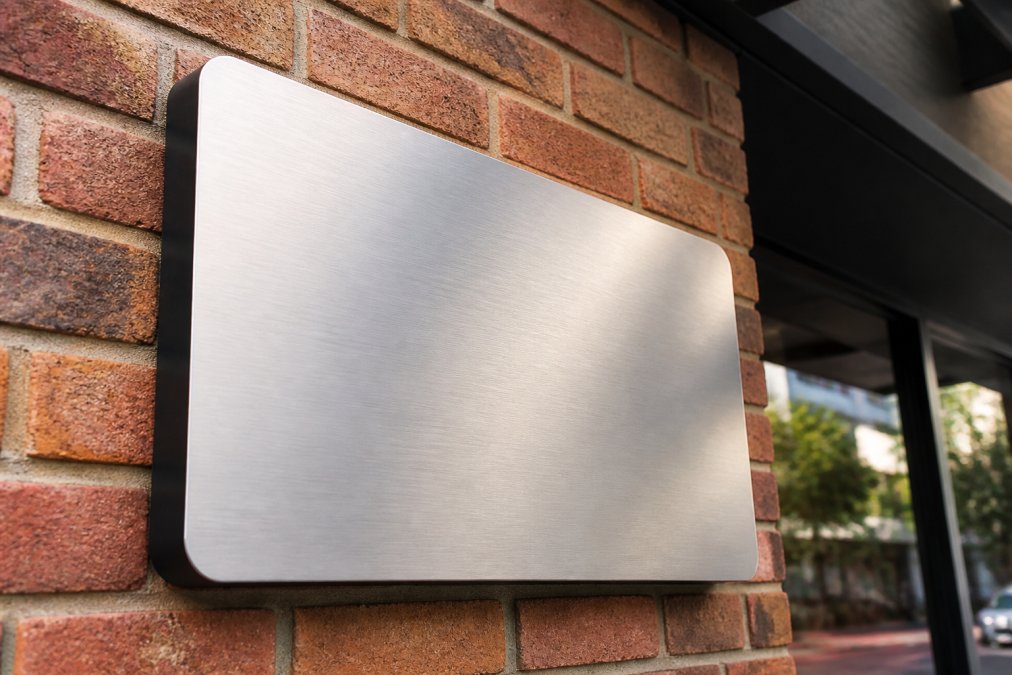
Where aluminum falls short: it dents. A stray shopping cart or a hard impact leaves a crease that won’t come out. For most storefronts and office exteriors, that trade-off is worth it.
Ask your fabricator for a powder-coated finish rather than bare mill finish. Powder coating adds a layer of finish durability that bare aluminum can’t match, and it’s where most of the color and UV resistance actually comes from.
2. Acrylic vs Aluminum for Business Signs: Which Wins Outdoors?
Acrylic wins for illuminated sign faces and clean, glossy looks; aluminum wins for structural panels and long-term weather resistance. The acrylic vs aluminum for business signs question comes down to what the sign needs to do.
Acrylic is a thermoplastic that transmits light beautifully, which makes it the standard for backlit channel letters and lightbox faces. It holds color well and resists UV fading. But acrylic gets brittle in cold weather and can crack under impact or thermal expansion stress. In a climate with hard freezes, that matters.
Aluminum doesn’t have that problem. It won’t shatter, it won’t crack, and it handles temperature swings without complaint. The catch is that aluminum isn’t translucent, so it can’t do the job acrylic does for illuminated faces.
The practical answer: use both. Many outdoor signs pair an aluminum body with an acrylic face. That combination gets you structural integrity from the metal and light transmission from the plastic.
3. High-Density Urethane: Rigid Detail Without the Weight
High-density urethane gives you the carved, dimensional look of wood or stone without the weight or the rot. It’s a rigid foam that machines into crisp letterforms and logos, then coats with a hard finish for outdoor use.
Sign makers favor it for dimensional lettering and decorative elements where detail matters. It’s lightweight, so it mounts easily on facades that couldn’t carry heavier materials. It also resists moisture far better than wood, which swells, warps, and rots.
The catch is the coating. Bare urethane won’t survive environmental exposure on its own. It needs a proper primer and topcoat, and if that finish fails, the material underneath degrades. Get the coating right and high-density urethane lasts for years.
Skipping the topcoat on high-density urethane is the most common installation mistake with this material. The sign looks fine for the first season, then the surface starts to chalk and crack, and repair means a full refinish.
4. Polycarbonate: Impact Resistance for High-Traffic Locations
Polycarbonate is the toughest transparent sign material you can buy, which makes it the right pick for locations where impact is a real threat. It’s the same family of plastic used in safety glasses, and it absorbs hits that would shatter acrylic.
For high-traffic storefronts, parking structures, and any sign within reach of carts, doors, or vehicles, polycarbonate’s impact resistance is worth the premium.
5. Aluminum Composite Panel: Lightweight Rigidity for Large Format
Aluminum composite panel is two thin aluminum skins bonded to a plastic core, and it’s the go-to substrate for large-format exterior signage. It stays flat across big spans, weighs far less than solid metal, and installs quickly on a frame.
6. Galvanized Steel: Structural Integrity for Permanent Mounts
Galvanized steel is the choice when the sign has to carry real structural load and stay put for decades. The zinc coating provides rust prevention, and the steel underneath delivers the tensile strength that lighter materials can’t match.
Choosing by Climate and Environment
Match the material to your site’s worst stressor, not its average day. That’s the framework most guides skip, and it’s the one that actually decides how long your sign lasts.
- Coastal or salt exposure: stainless steel or anodized aluminum, because salt accelerates corrosion on everything else
- Hard freezes: aluminum or polycarbonate, since acrylic turns brittle in cold
- High wind load: galvanized steel for structural mounts, composite panel for large flat faces
- High traffic or impact risk: polycarbonate faces with an aluminum or steel body
- Long sun exposure: powder-coated or anodized finishes to slow UV fading
There’s no single best material, only the best material for your site. Identify the one environmental stressor your sign faces most, then pick the substrate that handles it best.
Outdoor Sign Maintenance Tips That Extend Service Life
Outdoor sign maintenance tips matter more than most owners expect, because small upkeep tasks prevent the failures that force full replacement. A sign that gets cleaned and inspected twice a year will outlast an identical sign that gets ignored.
- Wash the face with mild soap and water every 3-6 months to remove grime and bird droppings
- Inspect mounting hardware for rust, loosening, or galvanic corrosion at each service visit
- Check cut edges and welds on steel signs for early rust and touch up with zinc-rich coating
- Look for cracks, crazing, or yellowing on acrylic and polycarbonate faces
- Re-seal exposed composite panel edges if the original seal shows wear
- Confirm the sign is still level and square after storms or freeze-thaw cycles
Sustainability and End-of-Life for Sign Materials
Recyclability is becoming a real factor in material selection, and it favors metals. Aluminum and steel are among the most recycled materials in use, and both hold resale value at end of life. When an aluminum sign reaches the end of its service, the metal goes back into the recycling stream rather than a landfill.
ADA-Compliant Outdoor Signage Materials
ADA compliant outdoor signage materials need to satisfy more than durability: they also have to meet federal accessibility rules for contrast, finish, and mounting. The Americans with Disabilities Act sets requirements for signage that identifies permanent rooms and spaces, and those rules apply whether the sign sits inside or out.
Our Verdict
Aluminum is the best all-around outdoor sign material for most businesses. It balances corrosion resistance, weight, finish durability, and cost better than anything else on this list. Pair it with an acrylic face for illuminated signs, or step up to galvanized steel when the mount has to carry structural load.
Frequently Asked Questions
What is the most weather-resistant material for outdoor business signs?
Aluminum and galvanized steel offer the highest weather resistance for outdoor signs. Aluminum resists rust naturally through oxidation, while galvanized steel adds a zinc coating for corrosion-resistant protection. Both handle UV exposure, moisture, and temperature swings without warping or cracking. For coastal or high-humidity areas, aluminum is often preferred because it will not rust even if the surface is scratched. Acrylic faces and polycarbonate covers add another layer of UV-resistant protection when paired with metal backings.
Are aluminum signs better than acrylic for outdoor business use?
Aluminum outperforms acrylic for structural outdoor use because it resists impact, thermal expansion, and weathering better over time. Acrylic offers superior color depth and a polished look, making it ideal for dimensional lettering and faces on smaller signs. However, acrylic can crack under heavy impact or extreme temperature shifts. Many businesses combine both: an aluminum substrate for the frame and acrylic for the face. The right choice depends on your climate, mounting location, and how much physical stress the sign will face.
What maintenance is required for high-durability outdoor signage?
High-durability signs need periodic cleaning with mild soap and water to remove dirt and pollutants. Check mounting hardware every six months for loose bolts or rust. Reapply protective coatings or wax on powder-coated and anodized surfaces annually. Inspect vinyl application for peeling edges and reseal as needed. For illuminated signs, test wiring and replace bulbs or LEDs as they dim. Addressing small issues early prevents moisture intrusion and extends signage longevity well beyond the manufacturer’s baseline estimate.
How do I choose the right material for an outdoor sign based on climate?
In rainy or coastal climates, choose aluminum or galvanized steel with powder coating to resist corrosion and moisture. For high-UV regions, polycarbonate and acrylic with UV-resistant treatments prevent fading and yellowing. In areas with high winds, aluminum composite panel offers a lightweight but rigid substrate that reduces structural load. Cold climates favor materials with low thermal expansion like aluminum and high-density urethane. Always confirm mounting hardware compatibility with your chosen substrate before installation.