Table of Contents
- What Causes Outdoor Business Signs to Fade
- How to Fix Faded Outdoor Business Signs: Assessment and Preparation
- Step-by-Step Restoration Techniques for Painted Surfaces
- Best UV Protective Coating for Outdoor Signs
- Sign Maintenance Checklist to Prevent Future Fading
- How to Choose a Reliable Sign Repair Company
- Repair vs. Replace: Making the Right Decision
- Common Mistakes to Avoid When Restoring Faded Signs
- Frequently Asked Questions
Last Updated: August 31, 2026
What Causes Outdoor Business Signs to Fade
Fading results from UV radiation breaking down pigments in paint, vinyl, and other sign materials. Ultraviolet rays penetrate the surface and degrade the chemical bonds holding color in place through oxidation, a process that accelerates in intense sun and never stops completely.
Weather compounds the damage. Rain, salt spray, and temperature fluctuations accelerate degradation. Moisture seeps into cracks, freezing and thawing cycles expand and contract materials, and airborne pollutants settle on surfaces. Signs facing south or southwest fade faster than shaded ones. Vinyl fades differently than painted wood, which fades differently than metal with a clear coat.
Chalking, when exterior paint binders break down and pigment particles separate from the surface, creating powdery residue, accelerates color loss. Run your hand across the sign; colored dust indicates oxidation in action.
Timeline varies by material quality. High-quality exterior paint with UV protection holds color for five to seven years in direct sun (the FDA). Budget paints fade within two to three years. Vinyl wraps typically last three to five years. Understanding what causes fading helps you make smarter restoration decisions.
How to Fix Faded Outdoor Business Signs: Assessment and Preparation
Before touching a brush or cleaner to your sign, assess the damage level and material. The right fix depends entirely on these factors.
Evaluate the Sign Material and Damage Level
Identify your sign material first: painted wood, metal with clear coat, vinyl, acrylic, or something else. Each responds differently to cleaning and restoration. Painted surfaces can be sanded and repainted. Vinyl wraps typically cannot be partially restored. Metal signs with clear coats need the coat stripped before repainting.
Assess damage severity. Light fading means lost vibrancy but intact, well-adhering paint. Moderate fading includes some chalking, minor peeling at edges, or discoloration. Severe damage involves significant peeling, deep cracks, rust on metal, or complete color loss in patches.
Look closely at edges and corners where moisture collects. If paint is lifting or vinyl is separating, the problem runs deeper than surface fading. Run your hand across the sign to check for chalking. For vinyl wraps, check if material is still bonded to the substrate; bubbling or peeling means replacement is necessary. For painted signs, check whether existing paint is sound enough to build on.
Gather Tools and Materials
For cleaning, gather a soft microfiber cloth, non-abrasive cleaner, mild soap, and clean water. Avoid pressure washers, which can drive moisture behind the sign material. A soft brush with natural bristles works for gentle agitation.
For sanding and preparation, pick up 120-grit and 180-grit sandpaper or sanding sponges. For repainting, you’ll need exterior-grade primer and paint formulated for your specific substrate.
Protective equipment matters. Wear gloves, eye protection, and a dust mask when sanding. If your sign is old, test for lead paint before sanding. Safety equipment for working at height is non-negotiable; use a stable ladder or scaffolding if your sign is mounted more than six feet up.
Step-by-Step Restoration Techniques for Painted Surfaces
Painted signs are the most common type and often the most restorable. The process involves cleaning, preparation, and repainting.
Clean and Prepare the Surface
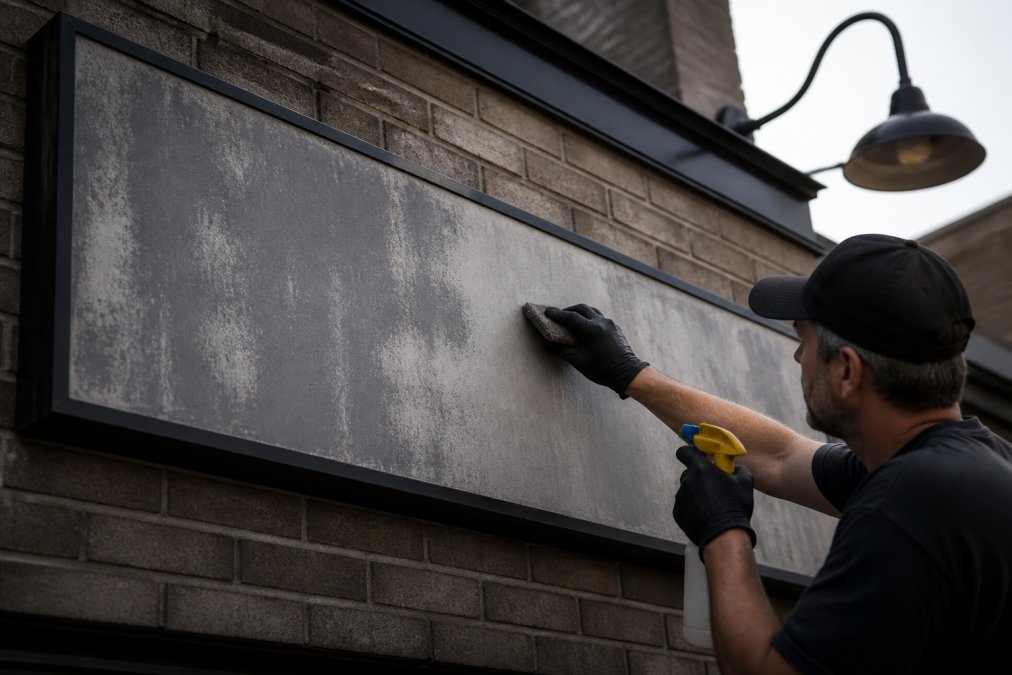
Start with thorough cleaning using mild soap and water with a soft cloth or soft-bristled brush. Remove dirt, algae, and loose debris without damaging underlying paint. For stubborn buildup, use a non-abrasive cleaner designed for painted surfaces. Let it sit for a few minutes, then rinse thoroughly with clean water. Dry completely with a microfiber cloth.
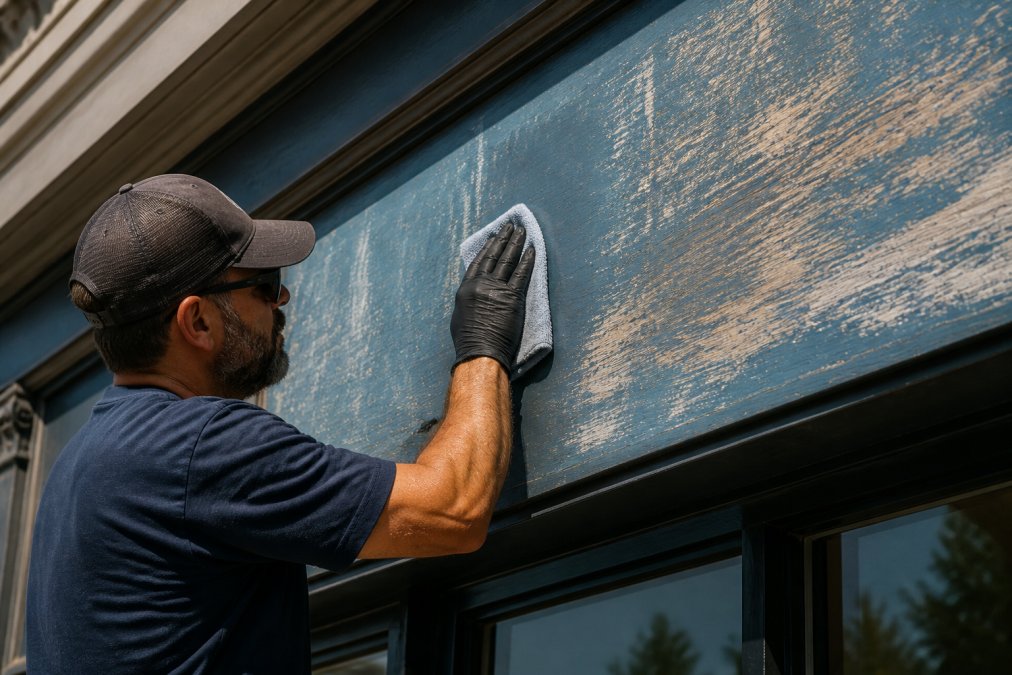
Inspect the surface again after cleaning. If chalking is present, light sanding with 180-grit paper will remove the powdery residue and prepare the surface for new paint. Use light pressure; you’re smoothing the surface, not sanding away old paint.
Sand and Prime for Repainting
If old paint is well-adhered but faded, light sanding is enough. Use 180-grit paper or a sanding sponge until the surface is dull and smooth. Wipe away all dust with a damp cloth and let it dry completely.
If old paint is peeling, cracking, or lifting, remove it with 120-grit sandpaper until you reach bare substrate. This is labor-intensive but necessary for proper adhesion. A detail sander makes this faster for large signs.
Once prepared, apply primer formulated for your substrate and climate. Exterior-grade primer with UV protection and mildew resistance is worth the investment. Apply according to manufacturer’s instructions, typically one coat, sometimes two for bare wood.
Apply New Exterior Paint
Choose exterior paint rated for your climate and substrate with UV inhibitors. Apply paint in thin, even coats. Two thin coats dry faster and adhere better than one thick coat. Follow manufacturer’s drying time between coats.
Paint in calm conditions if possible. Wind carries dust that settles on wet paint. Temperature should be between 50 and 85 degrees (the EPA). After the final coat dries, inspect the sign in natural light for even color, no drips, and complete coverage.
Best UV Protective Coating for Outdoor Signs
The best protection against future fading is a clear UV-protective topcoat. A clear polyurethane or polycrylic topcoat with UV inhibitors works well for painted signs, available in gloss, satin, and matte finishes. Gloss reflects light and makes colors pop but shows water spots. Satin offers good balance. Matte hides imperfections but offers slightly less UV protection.
For metal signs, a clear powder coat or UV-resistant clear coat applied professionally offers the best protection. If repainting a metal sign yourself, look for paint that includes UV inhibitors in the formulation.
Apply the topcoat in thin, even coats according to manufacturer’s instructions. Most UV-protective coatings need two coats for full protection. A properly protected sign resists fading for seven to ten years or longer, depending on climate and sun exposure.
Sign Maintenance Checklist to Prevent Future Fading
Prevention is easier than restoration. A simple maintenance routine keeps your sign looking fresh and extends its lifespan significantly.
| Maintenance Task | Frequency | What to Look For |
|---|---|---|
| Clean sign surface | Every 3 months | Dirt, algae, bird droppings, salt spray |
| Inspect for peeling or cracks | Every 6 months | Lifting paint, separation, rust on metal |
| Check color vibrancy | Every 12 months | Noticeable fading, chalking, discoloration |
| Reapply protective coating | Every 3-5 years | Worn topcoat, increased fading rate |
| Full inspection and touch-up | Every 2-3 years | Overall condition, need for repainting |
Cleaning every three months keeps grime from accelerating oxidation. Inspect for damage every six months, catching peeling early before moisture gets behind the paint. Check color vibrancy annually; photograph your sign under the same lighting conditions each year to notice gradual fading. Reapply protective coating every three to five years depending on climate. Scheduling a professional inspection every two to three years can help catch problems before they become expensive.
How to Choose a Reliable Sign Repair Company
If restoration is beyond your comfort level or your sign is large and complex, hiring a professional makes sense.
Look for a company with documented experience in sign restoration. Ask for before-and-after photos of similar projects. Check whether the company is licensed and insured. Ask about their process and timeline. Get a detailed estimate in writing before work begins, specifying what will be done, materials used, and total cost. Ask what happens if you’re not satisfied with the work; reputable companies stand behind their work.
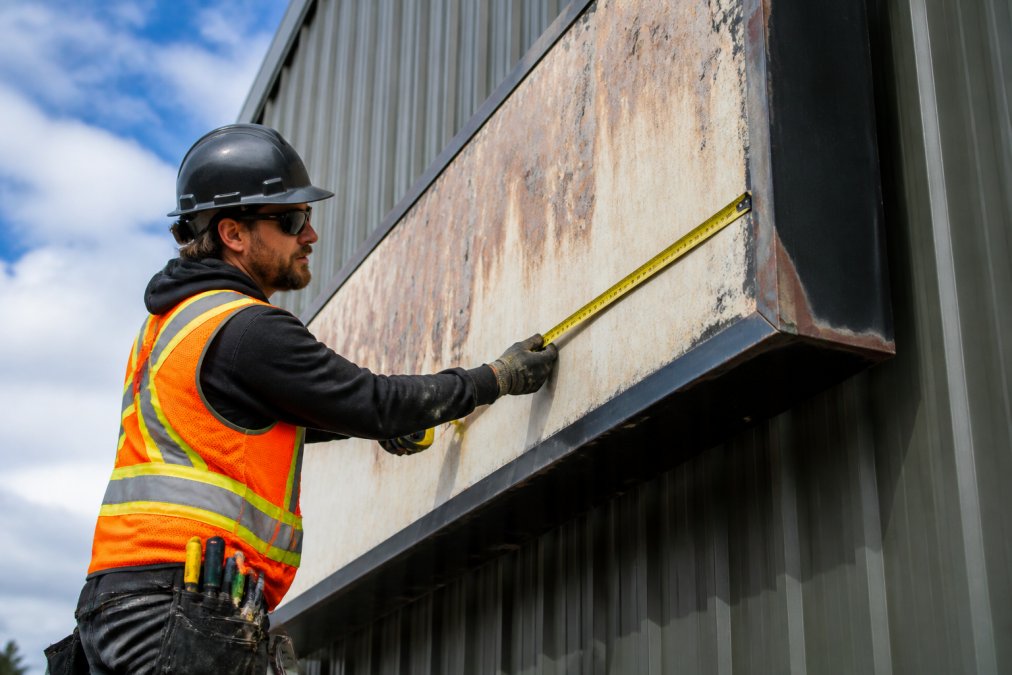
Triton Sign prioritizes meeting deadlines even on tight construction schedules, understanding that your sign is part of your brand promise.
Repair vs. Replace: Making the Right Decision
Consider repair if the sign structure is sound, damage is primarily cosmetic or surface-level, and the sign still serves your branding needs. Repair costs typically 30-50% of replacement.
Consider replacement if the sign is structurally damaged, rusted beyond repair, has rotted wood, broken internal components, or severely cracked substrate. If the sign is also outdated in style, replacement lets you modernize simultaneously. A new sign lasts fifteen to twenty years or more, depending on quality and maintenance.
Think about your brand message. A faded, poorly maintained sign signals neglect. A fresh, vibrant sign signals professionalism and care. Get professional opinions before deciding.
Common Mistakes to Avoid When Restoring Faded Signs
Don’t use pressure washers on painted signs; the force drives water behind the paint and causes peeling. Don’t skip surface preparation; painting over chalking, loose paint, or dirt leads to poor adhesion and premature failure. Don’t use interior paint on exterior signs; it lacks UV inhibitors and mildew resistance.
Don’t apply paint in poor conditions. Rain, high humidity, extreme heat, or cold results in poor adhesion. Don’t skip the protective topcoat; it extends paint life by years. Don’t ignore small problems; address damage as soon as you notice it. Don’t assume all sign companies are equal; poor workmanship shows immediately and lasts for years.
Faded signs damage your brand’s credibility. A worn, discolored sign tells customers you don’t invest in your appearance or care about details. Restoration brings your sign back to life and signals that your business is professional and well-maintained. Whether you handle it yourself or hire a professional, the investment pays dividends in customer perception and brand strength. Triton Sign has spent over 30 years helping businesses maintain and restore their visual presence. We handle everything from assessment and preparation to full restoration and protective coating application. Our team understands that your sign is part of your brand promise, and we deliver the quality and reliability your business deserves. Contact us for a professional evaluation of your sign’s restoration needs.
Frequently Asked Questions
Q: What is the best paint to use on an outdoor sign?
A: Use exterior-grade acrylic or polyurethane paint specifically formulated for outdoor metal or wood surfaces. These paints resist UV damage, moisture, and temperature fluctuations better than standard interior paint. Apply a primer first to ensure proper adhesion, then apply two coats of quality exterior paint. Always check the manufacturer’s specifications for your sign material to confirm compatibility and durability expectations.
Q: How often should outdoor business signs be cleaned and maintained?
A: Clean outdoor signs every 3-6 months, depending on your local climate and environmental exposure. Coastal areas with salt spray, heavily polluted regions, or high-traffic zones may require quarterly cleaning. Use mild soap and water with a microfiber cloth to remove dirt and oxidation. Inspect signs monthly for signs of chalking, fading, or damage. Regular preventative maintenance extends sign longevity and maintains color vibrancy, reducing the need for costly restoration later.
Q: Can I use a clear coat to protect my outdoor sign from UV damage?
A: Yes, a clear coat provides excellent UV protection and is one of the best ways to prevent future fading. Apply a weather-resistant clear coat or polyurethane topcoat over painted or vinyl surfaces after restoration. This protective coating acts as a barrier against UV rays, oxidation, and environmental damage. For maximum protection, reapply clear coat every 2-3 years or as the manufacturer recommends. This preventative measure significantly extends the life of your sign’s appearance and reduces weathering.
Q: When should you hire a professional for sign restoration?
A: Hire a professional if your sign shows severe fading, structural damage, chalking that won’t clean off, or if it involves specialty materials like neon or vinyl wraps. Complex restoration work, signs mounted at height, or large multi-location branding projects benefit from professional expertise and equipment. Professional sign restoration services ensure proper surface preparation, correct material selection, and warranty protection. If you’re unsure about material compatibility or your sign’s condition, a consultation with an experienced sign company can help you decide whether DIY restoration or professional service is the right choice.
This article was written using GrandRanker