Last Updated: October 23, 2026
Quick Summary
Post-installation maintenance tips for commercial signs include cleaning regularly, inspecting monthly, and servicing before problems escalate. Exterior signs need quarterly deep cleaning and annual professional inspection, while interior signs require monthly dusting and quarterly checks. Vehicle wraps need weekly visual checks and monthly cleaning to extend their 5-7 year lifespan.
- Monthly visual checks for exterior signs include inspecting for damage, tightening mounting bolts, and checking for water pooling or debris buildup.
- Quarterly deep cleaning of exterior signs should take 2-3 hours in mild weather conditions.
- Vehicle wraps typically last 5-7 years with proper care but only 2-3 years if neglected.
- Safe cleaning uses mild dish soap, distilled water, and microfiber cloths while avoiding high-pressure washers and harsh chemicals.
- Never attempt electrical repairs yourself; always hire a licensed electrician for wiring, connections, and power supply work.
Table of Contents
- Why Post-Installation Maintenance Matters for Commercial Signs
- Establish a Sign Maintenance Schedule by Type
- How to Clean Business Signs Without Damage
- Illuminated Sign Maintenance: Electrical and Lighting Checks
- Commercial Sign Maintenance Checklist: What to Inspect Monthly
- Installation Handoff: Documentation and Warranty Protection
- Seasonal and Location-Specific Maintenance Considerations
- When to Call a Professional for Sign Repair
- Frequently Asked Questions
Why Post-Installation Maintenance Matters for Commercial Signs
A new commercial sign looks pristine on day one. By month six, dirt buildup dulls the finish, bulbs flicker, and mounting hardware corrodes.
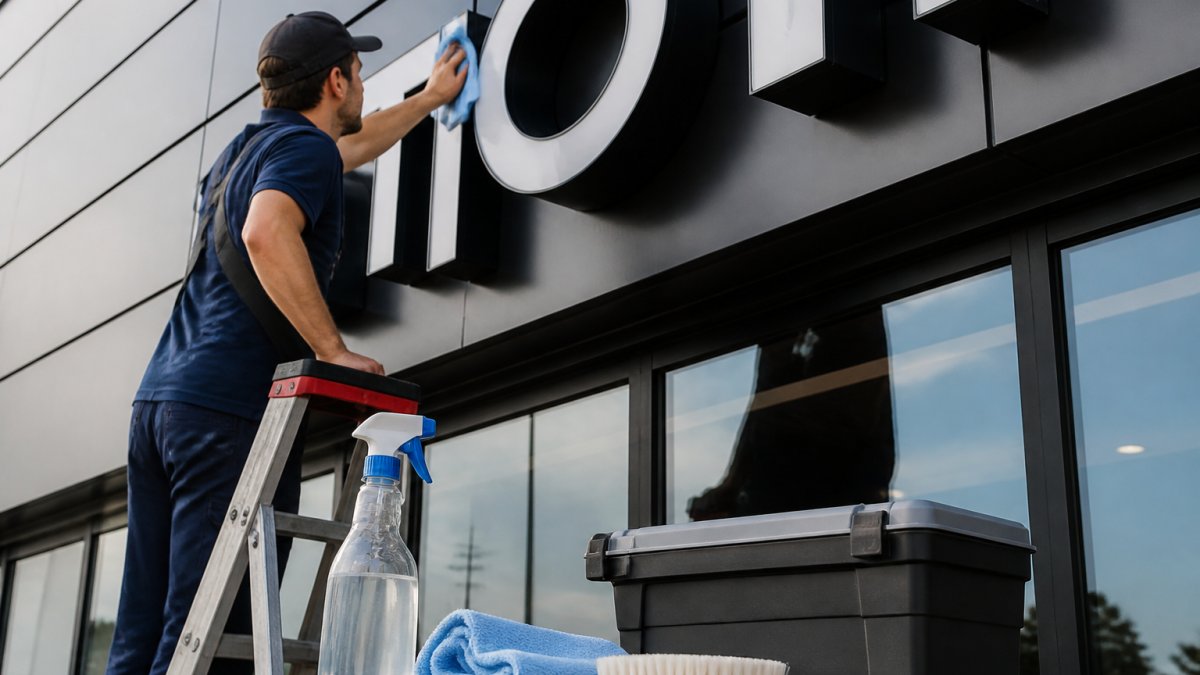
Post-installation maintenance tips for commercial signs aren’t optional extras, they’re the difference between a sign that lasts 5 years and one that lasts 15. How to Maintain Outdoor Business Signs for Longevity covers strategies to extend your sign’s lifespan. At Triton Sign, we emphasize that protecting your investment involves a basic routine: clean regularly, inspect monthly, and service before problems escalate.
The real cost isn’t maintenance, it’s replacement. Why Sign Safety Standards Matter for Seattle Businesses explains how proper maintenance protects both your investment and your liability.
This guide covers the post-installation maintenance tips for commercial signs that work, organized by sign type with checklists and timelines you can implement immediately.
Establish a Sign Maintenance Schedule by Type
Not all signs need the same care. A pole-mounted exterior sign faces weather, UV, and temperature swings; an interior lobby sign sits in climate control; a vehicle wrap flexes with movement.
Exterior and Pole-Mounted Signs
Exterior signs take the most punishment from wind, rain, snow, sun, and temperature swings. Your schedule should include:
Monthly visual checks:
- Look for visible damage, cracks, or fading
- Check that all mounting bolts are tight
- Look for water pooling or drainage issues
Quarterly deep cleaning:
- Plan a full cleaning every three months in mild weather
- Allow 2-3 hours for a typical exterior sign
Annual professional inspection:
- Have a licensed professional check electrical connections and structural integrity
- Test all lighting systems and inspect for corrosion
- Verify that the sign frame remains plumb and secure
Pole-mounted signs also need foundation checks. Soil settling, frost heave, or ground movement can shift the base. An annual structural inspection catches these issues before they become dangerous.
Interior and Lobby Signs
Interior signs have a gentler environment but still require attention. Dust is the main culprit, dimming illuminated faces and collecting in crevices.
Monthly maintenance for interior signs:
- Dust the sign face with a soft, dry cloth
- Wipe down the frame and mounting hardware
- Check that all electrical connections are clean and dry
Quarterly checks:
- Inspect the sign face for water damage or staining
- Check LED or bulb brightness; dim lights indicate failing components
- Look for cracks or damage to acrylic or plastic faces
Annual professional service:
- Have an electrician test all circuits and connections
- Replace any dimming bulbs or LEDs
- Check the power supply for signs with digital displays
Vehicle Wraps and Fleet Graphics
Vehicle wraps are mobile billboards exposed to road debris, UV rays, and constant movement, so they need a different schedule.
Weekly visual checks:
- Inspect the wrap for peeling edges or lifting corners
- Look for visible damage from road debris
- Check that all graphics remain vibrant and readable
Monthly cleaning:
- Wash with mild soap and water
- Avoid high-pressure washers, which can lift wrap edges
- Dry with soft microfiber cloths to prevent water spots
Quarterly inspections:
- Check for separation between the wrap and the vehicle body
- Look for UV fading or color shift
- Inspect seams and edges for lifting
Annual professional assessment:
- Have a wrap specialist inspect the entire installation
- Address any lifting or separation immediately
- Plan for touch-ups or repairs before they expand
Vehicle wraps typically last 5-7 years with proper care; neglect cuts that lifespan in half.
How to Clean Business Signs Without Damage
Cleaning sounds simple, but the wrong product or technique can damage acrylic, fade graphics, or corrode metal frames.
Safe Cleaning Products and Materials
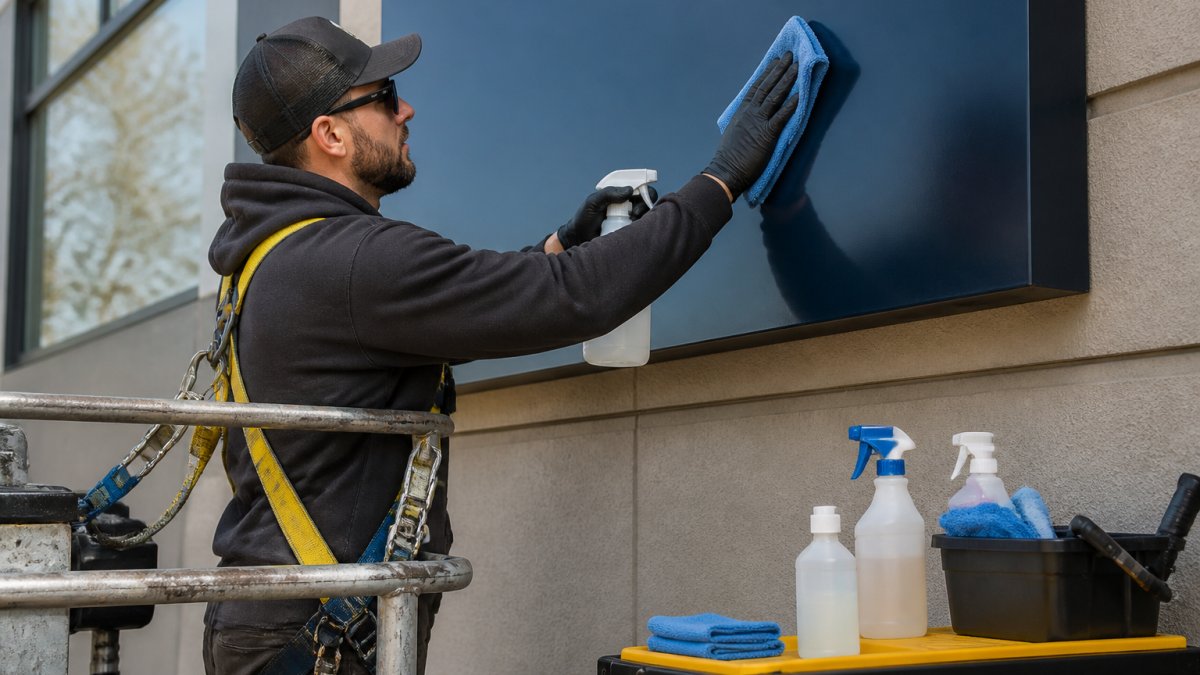
Start with the basics: mild detergent, water, and soft cloths. This handles 95% of sign cleaning without risk.
What to use:
- Mild dish soap or specialized sign cleaner
- Distilled water (tap water leaves mineral deposits)
- Microfiber cloths and soft-bristle brushes
What to avoid:
- Abrasive scrubbers or steel wool
- Harsh chemicals, solvents, or degreasers
- High-pressure washers
Your sign’s material determines what’s safe, acrylic faces need gentler treatment than metal frames. If unsure, test the cleaner on a small, inconspicuous area first.
Step-by-Step Cleaning Process
Step 1: Inspect before you clean
Look for existing cracks, peeling, or damage.
Step 2: Prepare your materials
Mix mild detergent with distilled water.
Step 4: Apply cleaner and scrub gently
Dip a soft cloth or brush in the soapy water.
Step 6: Dry completely
Use a squeegee to remove excess water, then dry with a microfiber cloth.
The entire process typically takes 30-60 minutes for a standard exterior sign.
For illuminated signs, always turn off power before cleaning electrical components. Water and electricity don’t mix. Wait 24 hours after cleaning before turning the sign back on to ensure all moisture has evaporated.
Illuminated Sign Maintenance: Electrical and Lighting Checks
Illuminated signs combine electrical systems, lighting components, and structural elements. Maintenance here focuses on keeping everything running safely and efficiently.
LED and Bulb Inspection Routine
LEDs last much longer than traditional bulbs but still fail. Regular inspection catches problems early.
Monthly checks:
- Note any dimming or flickering
- Look for bulbs that have burned out completely
- Check that all LEDs are producing consistent color
Quarterly replacement:
- Replace any burned-out bulbs immediately
- If multiple bulbs fail at once, the power supply may be failing, call a professional
- Test dimmer functions if your sign has them
Annual professional inspection:
- Have an electrician test all lighting circuits
- Check LED driver boards for corrosion or damage
- Verify that cooling fans (if present) are functioning
A single burned-out LED in a large sign becomes visible quickly and signals poor maintenance.
Wiring and Power Connection Safety
Electrical systems are the hidden infrastructure of illuminated signs. They also pose real safety risks if neglected.
What to inspect monthly:
- Look for any visible damage to conduit or wiring
- Check that all connections are tight and dry
- Ensure no water is pooling near electrical components
Annual professional electrical inspection:
- Have a licensed electrician test all circuits with a multimeter
- Check ground connections for corrosion
- Inspect the power supply for signs of wear
Water infiltration is the enemy of electrical systems. Check that all seals around conduit entries are intact. Caulk any gaps. A small leak today becomes a short circuit or fire hazard tomorrow.
Never attempt electrical repairs yourself unless you’re a licensed electrician. Sign electrical systems often carry high voltage. Improper work can cause injury or fire. Always hire a professional for wiring, connections, and power supply work.
Commercial Sign Maintenance Checklist: What to Inspect Monthly
A formal checklist keeps maintenance consistent and catches problems early. Print this and use it monthly.
| Inspection Item | Frequency | Action if Issue Found |
|---|---|---|
| Sign face for cracks or damage | Monthly | Document with photo; plan repair |
| Dirt, algae, or debris buildup | Monthly | Schedule cleaning within 2 weeks |
| Bulbs or LEDs for burnout | Monthly | Replace immediately |
| Mounting bolts and hardware | Monthly | Tighten if loose; check for corrosion |
| Electrical connections for water or corrosion | Monthly | Dry area; call electrician if corroded |
| Frame alignment and plumb | Quarterly | Contact professional if out of plumb |
| Wiring for visible damage | Quarterly | Call electrician; do not repair yourself |
| Power supply operation | Quarterly | Test with electrician if any concern |
| Structural integrity (pole, base, mounting) | Annually | Professional structural inspection |
| Complete electrical system | Annually | Licensed electrician full inspection |
Visual Damage and Physical Wear
Most damage is visible. Regular inspection means you spot it early.
What to look for:
- Cracks in acrylic or plastic faces
- Fading or color shift in graphics
- Peeling or lifting edges on wraps
Document everything with photos to create a maintenance record and track patterns. If the same area keeps failing, there’s likely an underlying structural or drainage problem.
Structural and Mounting Hardware
The sign is only as secure as its mounting. Loose hardware is a safety issue.
Monthly checks:
- Walk around the sign and visually inspect all bolts
- Look for rust or corrosion on fasteners
- Check that the sign hasn’t shifted or tilted
What to tighten:
- Any bolt that turns by hand is loose
- Use the correct wrench size, don’t strip bolts
- Tighten evenly across all fasteners, not just one side
When to call a professional:
- If bolts keep loosening repeatedly
- If you see cracks in the mounting bracket or pole
- If the sign has shifted from its original position
Mounting hardware failures can cause signs to fall, a safety hazard and a liability. Don’t ignore loose bolts.
Installation Handoff: Documentation and Warranty Protection
The installation process doesn’t end when the sign is hung. A proper handoff protects you and ensures smooth maintenance.
When Triton Sign completes an installation, we provide comprehensive documentation. This includes the maintenance schedule, warranty terms, electrical specifications, and contact information for future service.
What documentation you should have:
- Signed installation completion certificate
- Warranty terms and coverage details
- Electrical specifications and circuit diagrams
This documentation also protects you if issues arise.
Store documentation digitally and in hard copy. A maintenance log, even a simple spreadsheet, documents when cleaning occurred, what was repaired, and when professional service was performed.
Seasonal and Location-Specific Maintenance Considerations
Geography and season change maintenance demands. A sign in a snowy climate faces different stresses than one in a desert.
Winter considerations:
- Ice buildup on sign faces reduces visibility
- Salt spray from road treatment accelerates corrosion
- Freeze-thaw cycles stress mounting hardware
Summer considerations:
- UV exposure fades graphics faster
- Heat accelerates bulb and LED failure
- Dust and pollen accumulate more quickly
Coastal areas:
- Salt spray corrodes metal rapidly
- Humidity accelerates electrical failures
- Wind stress is higher
Desert areas:
- UV fading is severe
- Temperature swings stress materials
- Dust storms require post-event cleaning
Understanding your local climate helps you prioritize maintenance. A sign in a humid coastal area needs more aggressive electrical maintenance than one in a dry climate. A sign facing south gets more UV damage than one facing north.
Your location determines your maintenance priority. Coastal signs need corrosion prevention. Desert signs need UV protection. Northern signs need winter-specific care. Tailor your schedule to your climate.
When to Call a Professional for Sign Repair
Some maintenance you can handle yourself. Some you can’t. Knowing the difference is critical.
DIY maintenance (safe for most business owners):
- Regular cleaning with mild soap and water
- Visual inspections and documentation
- Tightening loose bolts
Professional work (always hire a licensed contractor):
- Electrical repairs or testing
- Wiring inspection or replacement
- Power supply replacement or troubleshooting
OSHA guidelines for working at heights require proper safety equipment and training for any work above ground level.
The cost of a professional repair is small compared to the cost of injury or liability.
When you need repairs, how to choose a reliable sign repair company walks you through finding a contractor who will get it right the first time.
Post-installation maintenance tips for commercial signs keep your investment visible, safe, and valuable.
Your sign represents your brand every single day. Maintain it like it matters, because it does. Contact Triton Sign to discuss a maintenance plan tailored to your signage and location, or to schedule professional service for signs that need expert attention.
Frequently Asked Questions
How often should commercial signs be inspected after installation?
Monthly visual inspections are recommended for most commercial signs. Check for physical damage, dirt buildup, and signs of wear. Illuminated signs should be inspected every 2-4 weeks to ensure LEDs and bulbs function properly. After severe weather events, inspect immediately regardless of schedule. Regular inspections catch small problems before they become costly repairs.
What should a commercial sign maintenance checklist include?
A comprehensive checklist covers: visual damage and cracks, dirt and debris on the sign face, water spots and residue, LED or bulb functionality, wiring condition, mounting hardware tightness, frame corrosion, and overall sign visibility. Document each inspection with photos and notes. Track any repairs or replacements. This creates a maintenance history that protects your warranty and helps identify patterns of wear.
How do you clean a commercial sign without damaging it?
Use mild detergent, warm water, and a soft microfiber cloth. Test any cleaning solution on a hidden area first. Avoid abrasive scrubbers or high-pressure water that can damage acrylic or plastic faces. For illuminated signs, turn off power before cleaning. Dry thoroughly with a lint-free cloth to prevent water spots. Different materials require different care, acrylic signs need gentler handling than vinyl or metal.
What maintenance issues should be addressed right away?
Address these immediately: flickering or non-functional LEDs or bulbs, visible cracks or breaks in the sign face, loose or missing mounting hardware, water pooling or moisture inside the sign, exposed wiring, and corrosion on metal components. These issues affect sign safety, visibility, and longevity. Delaying repairs can lead to further damage, electrical hazards, or customer perception problems. Contact a licensed professional if you’re unsure about the severity.
