Table of Contents
- Why Monument Signs Are a Smart Investment for Commercial Properties
- 1. Monument Signs Boost Street-Level Visibility and Brand Awareness
- 2. Make a Strong First Impression and Project a Professional Image
- 3. Help Customers, Visitors, and Tenants Find Their Way
- 4. Monument Signs for Multi-Tenant Properties: Tenant Visibility and Hierarchy
- 5. Monument Sign Design and Materials: Durability and Weather Resistance
- 6. Monument Signs vs. Pylon Signs: Which Fits Your Commercial Property?
- 7. What to Know Before You Install: Permits, Costs, and Measuring Success
- Frequently Asked Questions
Last Updated: October 12, 2026
Why Monument Signs Are a Smart Investment for Commercial Properties
Monument signs are freestanding, low-profile structures that identify a commercial property from the road, and they remain one of the most durable branding assets a business can own. At Triton Sign, we’ve spent over 30 years designing, fabricating, and installing signage for commercial properties, and the pattern is consistent: properties with well-placed monument signage get noticed first, and they keep getting noticed for decades.
The benefits of installing monument signs for commercial properties extend well beyond a name on a board. They shape how customers, tenants, and passersby perceive a property before anyone steps inside. Below, we break down seven reasons monument signs earn their place at your entrance, plus what to know about permits, materials, and measuring results.
Monument signs work because they combine three jobs in one structure: visibility from the street, brand recognition, and wayfinding. Few other signage types cover all three at ground level.
1. Monument Signs Boost Street-Level Visibility and Brand Awareness
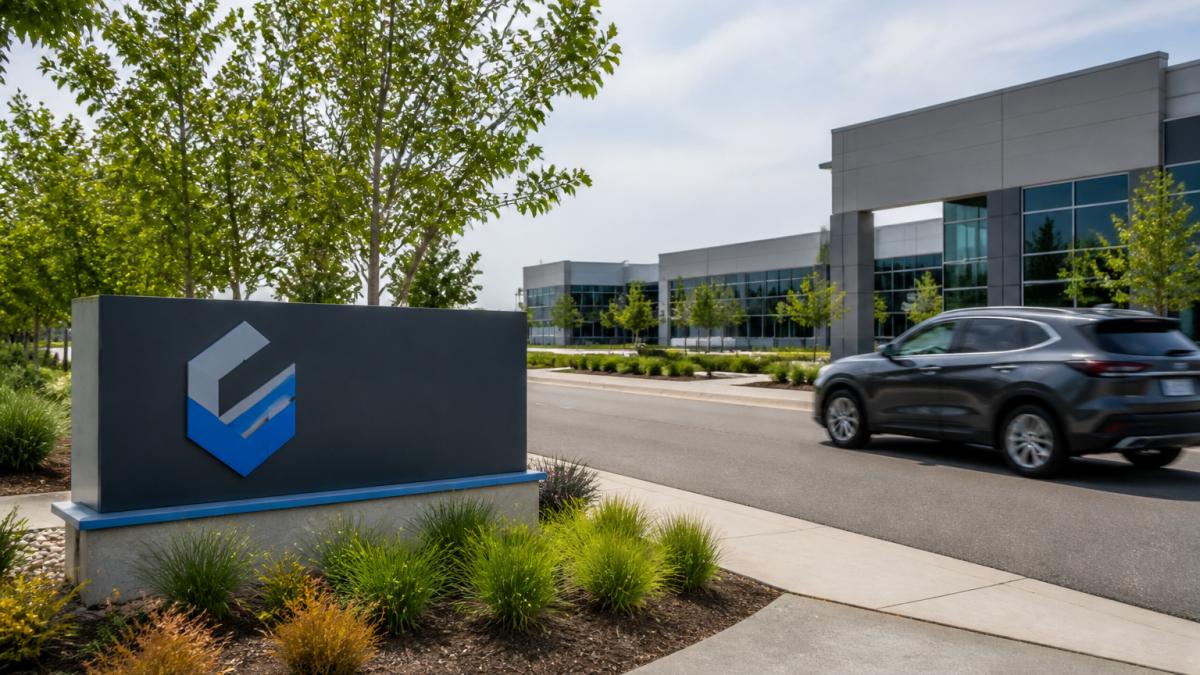
Street-level visibility is where monument signs outperform almost everything else. A monument sign sits low to the ground, close to the roadway, and directly in the driver’s line of sight.
Unlike tall pole signs, monument signs don’t get lost in a skyline of competing structures. They read clearly at the speed drivers actually travel on local roads. For a business park or retail center, that repeated exposure builds brand recognition the way few other property investments can.
2. Make a Strong First Impression and Project a Professional Image
A well-built monument sign tells visitors something before they park: this property is established and well run. The reverse is also true. A faded, crooked, or missing sign signals neglect, and that impression sticks.
What most benefit lists skip is why the impression forms so fast, and what specifically drives it.
The cues that actually do the work:
- Alignment and level. A sign that is visibly out of plumb reads as unmaintained, even if the building behind it is immaculate. Level, plumb installation is the single biggest driver of perceived quality.
- Material consistency. When the sign base material, the building facade, and the landscape hardscape share a family of finishes (for example, split-face block base with a masonry building, or brushed aluminum with a glass entry), the property reads as designed rather than assembled.
- Typography discipline. Two typefaces maximum, consistent weight, and letterforms sized for the reading distance. Mixed fonts and stretched lettering are the fastest way to look dated.
- Color contrast. Sign copy needs enough luminance contrast against its background to stay legible in flat midday light and at dusk. Low-contrast color pairs look elegant in a design proof and disappear on the street.
- Maintenance state. Burned-out lamps, water staining on the base, and peeling vinyl are read as ownership signals, not sign problems.
Why this matters financially. Curb appeal is one of the few property improvements that shows up in more than one place on the books.
The comparison that matters. Landscaping, repaving, and exterior painting all improve appearance, but they are recurring costs, plantings die, asphalt cracks, paint fades.
First impressions are not a vague benefit, they are the sum of alignment, material consistency, typography, contrast, and upkeep. Get those five right and the sign keeps earning for the life of the structure.
3. Help Customers, Visitors, and Tenants Find Their Way
Wayfinding is the practical benefit people underestimate most. A monument sign at the entrance, paired with directional signage inside the property, tells visitors where to turn, where to park, and which building to enter.
How wayfinding actually breaks down. A functional wayfinding system answers four questions in sequence, and each one usually maps to a different sign:
- Am I in the right place?, the monument sign at the main driveway, carrying the property name and address.
- Where do I go next?, directional signs at the first decision point (the internal intersection or loop road).
- Which building or suite?, building-mounted identification and a tenant directory.
- Where do I park and enter?, parking and entrance markers, including accessible routes.
A monument sign that only does step one leaves the other three to guesswork. That is why the entrance sign and the internal directional package should be planned together, not bought separately.
Design mechanics that make a directory readable. For multi-tenant complexes, the tenant directory on the monument sign is where wayfinding either works or fails:
- Cap the panel count. Directories become unreadable past roughly a dozen entries at typical monument sign sizes. Beyond that, split into a primary directory at the entrance and secondary directories at each building.
- Sort by a rule the visitor can guess. Alphabetical works for professional offices; by building or suite number works for campuses. Mixed sorting forces people to read the whole board.
- Size for the reading distance. Copy meant to be read from a stopped car at the driveway can be smaller than copy meant to be read from a moving lane. The two are not interchangeable.
- Keep the address prominent. Navigation apps and 911 dispatch both rely on a visible street address at the entrance.
- Plan for change. Tenant names turn over. Replaceable panels and a consistent panel module let you update one entry without rebuilding the sign.
Accessibility considerations. Signage tied to a project’s accessible routes, parking, entrances, and interior wayfinding, is generally subject to accessibility requirements, and the standards most jurisdictions reference are the ADA Standards for Accessible Design.
How to tell whether it is working. Wayfinding is measurable, and the signals are simple:
- Fewer calls asking for directions or which entrance to use
- Fewer visitors arriving at the wrong building or the loading area
- Delivery and service drivers finding the right dock without a phone call
- Tenant feedback during renewals, where navigation complaints tend to surface
- A before-and-after comparison of front-desk or reception questions after the sign goes in
If none of those move after installation, the problem is usually placement or panel count, not the concept.
Walk the property as a first-time visitor would, from the road, at driving speed, then on foot from the parking area. Most wayfinding failures are visible in that one pass and are far cheaper to fix at the design stage than after fabrication.
4. Monument Signs for Multi-Tenant Properties: Tenant Visibility and Hierarchy
Monument signs for multi-tenant properties solve a problem single-tenant signs never face: how to give every business fair, visible placement without cluttering the entrance. The answer usually comes down to hierarchy.
A common approach is to place the property name or anchor tenant at the top, with smaller tenant panels arranged below in a consistent grid. This keeps the sign readable while giving each business clear identity.
- Anchor tenants get the largest, highest placement
- Secondary tenants follow in matched panel sizes
- Directory-style panels work well for offices with many small suites
- Changeable panels make tenant turnover easier to manage
Plan for tenant changes from day one. Choose a monument sign system with replaceable panels so you can swap a tenant name without rebuilding the entire structure. It saves real money over the life of the sign.
5. Monument Sign Design and Materials: Durability and Weather Resistance
Monument sign design and materials decide how long the sign looks new. The right combination holds up against sun, rain, and temperature swings while keeping maintenance low.
Common material choices include:
- Concrete or masonry bases for weight, stability, and a permanent look
- Aluminum panels for lightweight durability and easy replacement
- Acrylic or polycarbonate faces for clean graphics and impact resistance
- LED or external lighting for nighttime visibility and brand consistency
Weather resistance is the deciding factor in most climates. Materials that resist fading, cracking, and moisture damage protect both your investment and your brand image. Cheap materials show their age quickly, and replacement costs add up faster than doing it right the first time.
6. Monument Signs vs. Pylon Signs: Which Fits Your Commercial Property?
Monument signs vs. pylon signs comes down to height, visibility distance, and local rules. A monument sign is a low, ground-level structure, usually under a few feet tall, built for close-range visibility. A pylon sign is a tall pole-mounted structure designed to be seen from far away, often from a highway or major road.
| Feature | Monument Sign | Pylon Sign |
|---|---|---|
| Height | Low, ground-level | Tall, pole-mounted |
| Best visibility | Street-level, close range | Long-distance, high-speed roads |
| Typical use | Business parks, offices, retail entrances | Highway-front retail, gas stations |
| Zoning limits | Often height-restricted | Regulated by height and setback |
| Aesthetic | Permanent, architectural | Promotional, high-impact |
If your property sits on a local road with moderate traffic, a monument sign usually fits better and faces fewer zoning restrictions. If you need to catch drivers on a fast highway, a pylon sign may be necessary. Many properties use both: a pylon for distance and a monument sign at the entrance for a polished, professional look.
Don’t assume your property can take a taller sign. Many jurisdictions cap monument sign height and total square footage. Installing first and asking later can mean removal and rebuilding at your own cost.
7. What to Know Before You Install: Permits, Costs, and Measuring Success
Before installation, confirm three things: permits, budget, and how you’ll measure success. Skipping any of them leads to delays or wasted spend.
Permits and zoning. Most commercial signage requires a permit, and rules cover height, size, setback from the property line, and lighting. Check with your local planning office early.
Costs and budgeting. Pricing depends on size, materials, lighting, and installation conditions. Because every property differs, we quote each project individually rather than publish flat rates.
Measuring success. Track what the sign is meant to do. Look at call volume, walk-in traffic, and how often visitors mention finding you easily.
Commercial properties on local roads, business parks, multi-tenant complexes, and offices that need strong street-level visibility without the height restrictions of pylon signs.
A monument sign is one of the few property investments that improves visibility, brand image, and wayfinding at the same time.
Frequently Asked Questions
What is the main purpose of a monument sign for a commercial property?
A monument sign serves several purposes: it boosts street-level visibility, reinforces brand awareness, and helps visitors find the property. Unlike tall pylon signs, monument signs sit low to the ground, creating a professional, grounded look that suits office parks, retail centers, and multi-tenant complexes. They also provide a dedicated space for tenant directories and directional information, making it easier for customers and clients to navigate your property from the road.
How do monument signs help multi-tenant properties attract and direct visitors?
For multi-tenant properties, monument signs act as a central wayfinding tool. They can display a tenant directory, directional arrows, and suite numbers, so visitors know exactly where to go before they park. This reduces confusion and improves the experience for customers, clients, and delivery drivers. A well-designed monument sign also gives each tenant equal visibility, which is a key selling point for property managers trying to attract and retain businesses.
What should commercial property owners consider before installing a monument sign?
Before installing a monument sign, check local zoning and permit requirements, including height, setback, and size restrictions. Confirm landlord or HOA approval if you lease the property. Choose materials that withstand weather and require low maintenance, such as concrete, stone, or aluminum. Plan for lighting if you want nighttime visibility. Also budget for installation and any ongoing maintenance costs. Working with an experienced signage provider can help you navigate these steps and avoid costly delays.
How do monument signs compare to pylon signs in terms of cost and visibility?
Monument signs typically cost less to install than tall pylon signs because they require less structural support and often face fewer height restrictions. They offer excellent street-level visibility and a more integrated look with landscaping. Pylon signs are better for high-speed roads where drivers need to see a sign from a distance. The right choice depends on your property’s traffic speed, local sign codes, and branding goals. A signage professional can help you weigh the trade-offs.