Last Updated: October 29, 2026
Quick Summary
The most weather resistant storefront signs are rigid aluminum or aluminum composite panels with UV-stabilized inks, laminated faces and sealed edges. These materials resist rain, wind and fading far better than standard vinyl or banners. Vinyl and banners suit short-term or changing messages, while permanent fascia signs should use rigid substrates.
- Aluminum composite panels generally handle rain and wind well because they stay flat and rigid.
- Acrylic needs UV-stabilized formulations for outdoor use, or it can yellow or become brittle.
- Vinyl and banner materials typically fade and wear sooner than metal or rigid composites.
- Rain resistance is usually the easiest requirement to meet; UV and wind performance separate good options from the rest.
- Compare signs on cost per year of service life, not sticker price.
Table of Contents
- Why Weather Resistance Matters for Storefront Signs
- Outdoor Sign Material Options Compared
- Rain, Wind, and UV Performance by Material
- Matching Sign Type and Climate to the Right Material
- Best Material for Outdoor Signs: Lifespan and Total Cost
- Keeping a Storefront Sign Looking New: Maintenance Basics
- Getting a Weather-Resistant Sign Installed Right
- Frequently Asked Questions
Why Weather Resistance Matters for Storefront Signs
Your storefront sign works around the clock, so it takes more weather than almost any other piece of business signage, which is why choosing weather resistant storefront signs matters so much.
A weather-resistant sign is one that keeps its color, shape, and legibility when exposed to moisture, sunlight, and wind over time. The material, the print or coating, and the way the sign is mounted all shape that performance.
Outdoor signage faces three main threats. Moisture can cause swelling, warping, or corrosion, especially at edges and seams. Ultraviolet light breaks down inks and plastics, which leads to fading and chalking. Wind puts stress on panels and mounts, and a loose sign becomes a safety problem.
Outdoor Sign Material Options Compared
Most storefront signs are built from a short list of substrates. Each one trades cost, weight, rigidity, and lifespan in a different way. The right choice depends on how much exposure the sign gets and how long you need it to last.
Aluminum and Aluminum Composite Panels
Aluminum composite panels, often sold under the Dibond name, are among the most common choices for permanent outdoor signage. For a broader ranked overview of durable options, see durable outdoor business sign materials.
Aluminum is widely used for weather resistant storefront signs because it holds a clean edge for printed graphics. Its main drawbacks are cost compared with plastics and the need for a proper mounting frame on larger panels.
Acrylic and Plexiglass Signage
Acrylic, commonly known as Plexiglass, offers a glossy, high-clarity finish and works well for dimensional letters, illuminated signs, and backlit displays. It resists moisture and handles most outdoor conditions when properly sealed.
Acrylic is more brittle than metal and can scratch, so it suits protected or semi-protected locations better than exposed spots facing heavy hail or vandalism. Its strongest advantage is visual impact rather than raw toughness.
Vinyl, PVC, and Banner Options
Vinyl graphics, PVC board, and outdoor banners are the most economical options. PVC board is rigid and moisture-resistant, while vinyl decals and banners are flexible and easy to change. Many businesses use them for promotions, seasonal messaging, and temporary signage.
The tradeoff is lifespan. Vinyl and banner materials typically fade and wear sooner than metal or rigid composites. They work best for short-term or changing messages, not permanent identity signage.
Rain, Wind, and UV Performance by Material
Performance varies across materials in ways that matter for storefronts.
Acrylic shines in visual clarity but needs UV-stabilized formulations for outdoor use. Without that protection, it can yellow or become brittle over time.
Vinyl and PVC are moisture-resistant, but their UV resistance depends heavily on the ink and laminate used.
The table below sums up how each material holds up against the three main outdoor threats.
| Material | Strongest against | Main weakness |
|---|---|---|
| Aluminum composite panels | Rain and wind; stays flat and rigid | Needs a proper mounting frame on large panels |
| Acrylic (Plexiglass) | Visual clarity when UV-stabilized and sealed | Can yellow or become brittle without UV protection |
| Vinyl, PVC and banners | Moisture resistance; easy to change | UV fade depends on ink and laminate quality |
Matching Sign Type and Climate to the Right Material
Most material roundups treat every outdoor sign as if it faces the same conditions. In practice, a storefront uses four distinct sign types, and each one stresses materials differently. Pair the sign type with the exposure, then confirm the choice against your local climate.
Material fit by storefront sign type
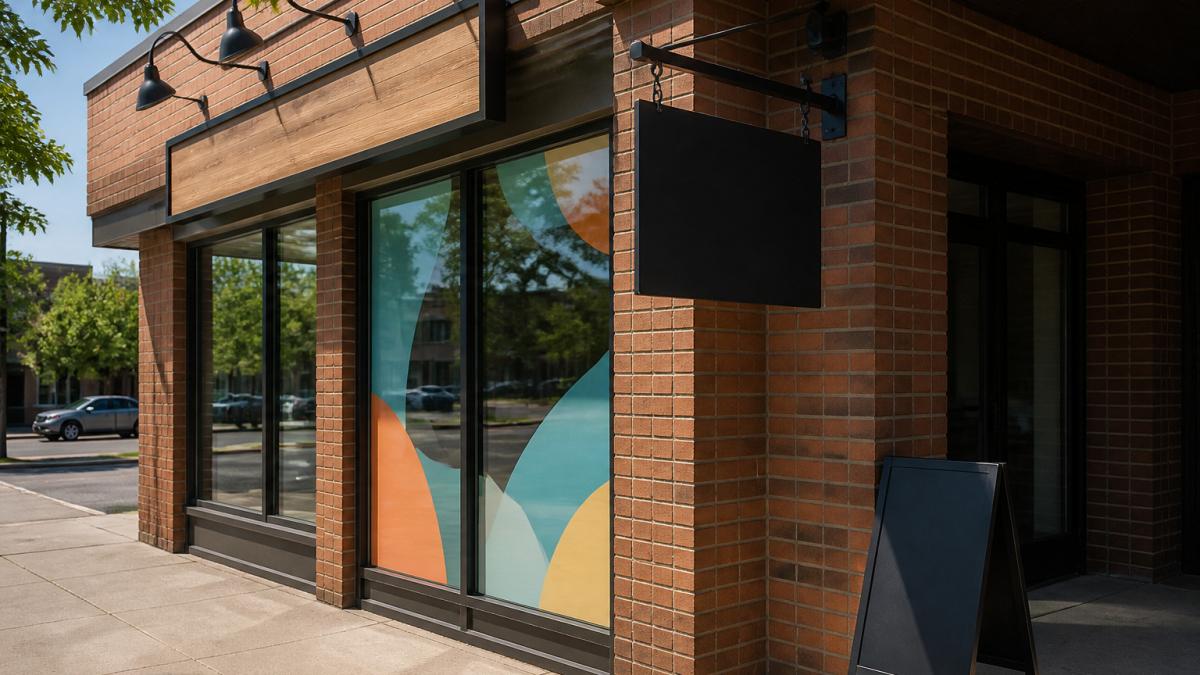
Fascia signs (the main band above the entrance). These are permanent identity signs, usually large, and often the most wind-exposed element on the facade.
Window graphics and window decals. Glass is a protected surface, so the material question shifts from structural strength to adhesion and UV stability.
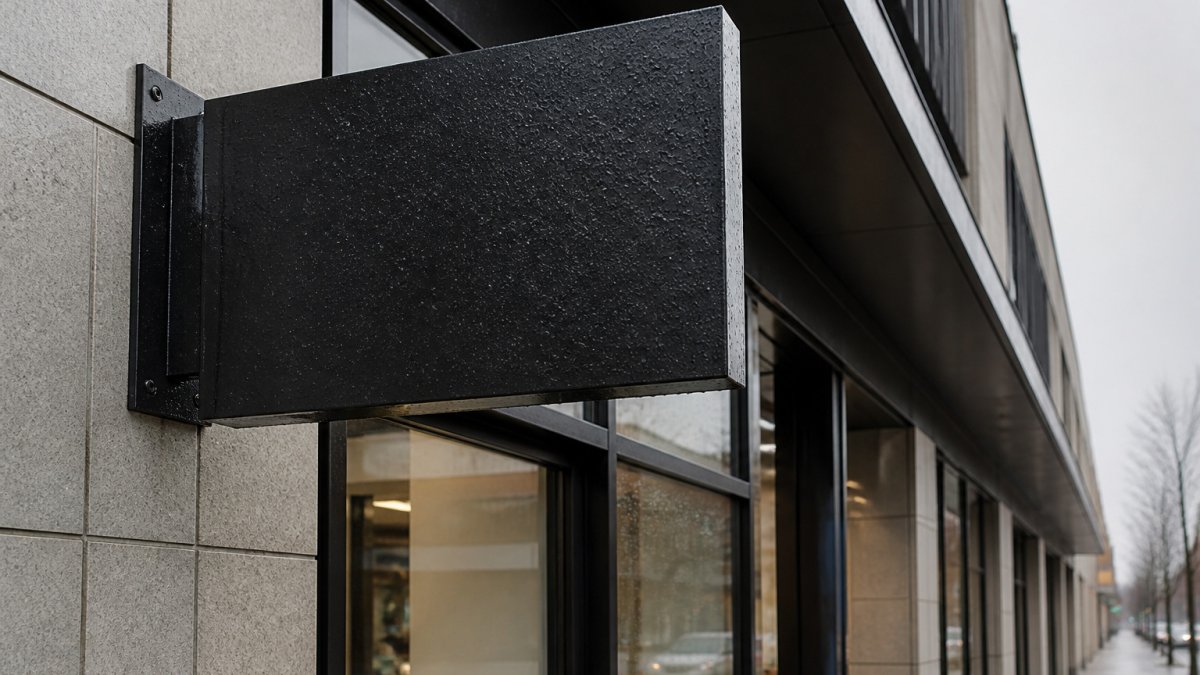
Projecting (blade) signs. These hang perpendicular to the facade and catch wind from two directions, so they need a rigid substrate plus a bracket rated for the sign’s sail area. Aluminum composite, solid aluminum, and carved or cast acrylic are typical. Thin PVC board and unsupported acrylic sheets are risky here because a projecting sign acts like a sail in gusting wind.
Sidewalk and sandwich-board signs. These are portable, so the priorities are weight, stability, and replaceability.
Climate-specific selection guidance
General ‘weather resistant’ claims hide the fact that different climates attack different failure points. Use these patterns as a starting filter:
- Coastal salt exposure. Salt spray accelerates corrosion on fasteners, brackets, and any ferrous hardware long before the sign face fails. Favor aluminum substrates with stainless or coated fasteners, sealed edges, and powder-coated finishes. Wash more often to remove salt film.
- Freeze-thaw cycles. Water that enters seams, edges, or mounting penetrations expands when it freezes and can delaminate composite panels or crack acrylic. Edge-sealing and sealed penetrations matter more here than substrate choice alone.
- High heat and intense sun. UV and heat drive fading, chalking, and acrylic yellowing. Specify UV-stabilized acrylic, outdoor-grade inks, and a UV laminate; dark colors absorb more heat and can accelerate adhesive failure on vinyl.
- Heavy rain and humidity. Moisture absorption and edge wicking are the enemies. Non-absorbent substrates (aluminum, composite, PVC) with sealed edges outperform wood-based and paper-faced products.
A practical shortcut: pick the substrate for structure and the print system (ink plus laminate plus edge seal) for appearance. The substrate keeps the sign flat and attached; the print system keeps it legible. Most premature failures come from getting one of those two wrong, not from the material category itself.
If your storefront faces more than one stressor, such as coastal salt plus strong sun, prioritize the substrate and hardware for corrosion and wind, then spend the remaining budget on UV-stable print and laminate. Structural failures are expensive and unsafe; fading is cosmetic.
Best Material for Outdoor Signs: Lifespan and Total Cost
Purchase price is the least useful number in outdoor signage. What matters is installed cost divided by useful service life, plus the maintenance and replacement burden in between. A sign that costs less up front but needs replacing twice as often usually loses on total cost of ownership.
Realistic service-life ranges by material
Treat these as planning ranges for well-made, properly installed storefront signs in typical outdoor exposure, not guarantees. Actual life depends on climate, print system, mounting, and maintenance.
- Aluminum composite panels (Dibond-style): commonly expected to hold structural integrity for many years, with the printed or applied graphic surface often the limiting factor. The panel itself outlasts most vinyl graphics applied to it.
- Solid aluminum: among the longest-lived substrates; the face and finish determine appearance life more than the metal does.
- Acrylic (UV-stabilized): good clarity and color life when stabilized and sealed; non-stabilized or unsealed acrylic can yellow and embrittle noticeably sooner.
- PVC board: rigid and moisture-resistant, but more prone to UV chalking and impact damage than metal; often a mid-range lifespan.
A common pattern: the substrate rarely fails first. Inks, laminates, adhesives, and edge seals usually determine when a sign starts looking tired.
What drives installed cost
Installed cost is not just material times square footage. The main cost drivers are:
- Substrate and thickness, thicker panels and solid aluminum cost more but resist wind better on large spans.
- Print and finish, outdoor inks, UV laminate, and edge-sealing add cost but extend appearance life.
- Size and wind exposure, larger sail area requires heavier mounting and hardware.
- Mounting surface and method, masonry, stucco, metal panel, and wood each need different anchors and may need a frame or backer.
- Electrical work, illuminated signs add wiring, permitting, and service access.
Because these vary so much by site, request a site-specific estimate rather than relying on per-square-foot rules of thumb.
Maintenance and replacement cadence
Budget for upkeep, not just installation:
- Routine cleaning: periodic mild soap-and-water washing removes dirt, salt, and pollution film; coastal and high-traffic locations need it more often.
- Inspection: check fasteners, edge seals, vinyl edges, acrylic for cracks, and illuminated components on a regular schedule.
- Graphic refresh: plan to replace or re-face vinyl graphics before the substrate; the panel often stays while the message layer is renewed.
- Full replacement: reserve for structural damage, widespread fading, or a rebrand.
Questions that reveal true long-term value
Ask every vendor the same set of questions so quotes are comparable:
- What outdoor service life do you expect for this substrate and this print system, and what is that based on?
- What UV and fade warranty applies to the print and laminate, and for how long?
- What mounting method do you recommend for my wind exposure and wall type?
- What maintenance does this sign need, and how often?
- What is the expected replacement interval for the graphic versus the substrate?
Compare signs on cost per year of service life, not sticker price. A rigid aluminum or composite sign with a quality print system and sealed edges usually wins on total cost of ownership for permanent storefront identity, while vinyl and banners remain the economical choice for short-term and changing messages.
U.S. Small Business Administration guidance on business signage and permits
Keeping a Storefront Sign Looking New: Maintenance Basics
Routine maintenance extends the life of any outdoor sign. You can find practical sign care and upkeep steps on the Triton+Sign site.
Inspect the sign regularly for loose fasteners, lifting vinyl edges, cracks in acrylic, and signs of moisture at seams. Address small problems early, before they spread.
Watch for fading. Gradual color loss often signals that UV protection is wearing down, and it may be time to plan a replacement or refresh before the sign looks neglected.
Getting a Weather-Resistant Sign Installed Right
Installation quality determines whether a well-chosen material performs as expected. Our installation best practices guide walks through doing the mounting correctly.
A reliable installer should confirm the mounting surface, select appropriate hardware for the substrate and sign weight, and seal penetrations to keep water out.
Before the work begins, ask what the warranty covers and how any issues after installation would be handled.
Frequently Asked Questions
What is the best material for an outdoor storefront sign?
For most storefronts, aluminum composite panels such as Dibond offer the best balance of rigidity, light weight, and weather resistance. They resist warping in rain and sun and hold printed graphics well. Acrylic performs well for dimensional or backlit signs, while vinyl works for lower-cost temporary or budget-conscious graphics. Exact pricing depends on sign size, quantity, graphics, and installation requirements, so contact Triton Sign directly for a quote tailored to your storefront.
Are aluminum signs better than PVC signs for outdoor use?
Generally, yes. Aluminum and aluminum composite panels are more rigid and resist wind flexing better than PVC, which can warp or yellow after prolonged sun exposure in some formulations. PVC is lighter and more affordable, making it suitable for shorter-term or indoor-adjacent use. For a permanent outdoor storefront sign that must survive rain, wind, and UV exposure, aluminum-based substrates are usually the stronger choice.
How long do outdoor storefront signs typically last?
Lifespan depends heavily on material, print or coating quality, sun exposure, and maintenance. Well-made aluminum composite signs with UV-resistant inks and laminate can remain serviceable for many years, while vinyl graphics may need replacement sooner under constant direct sun. Protective laminates and edge sealing extend service life. Ask your sign provider to recommend an expected service life for your specific project.
How should I choose a sign for a storefront exposed to direct sunlight?
Prioritize UV-stable inks, laminates rated for outdoor exposure, and substrates that resist warping under heat, such as aluminum composite panels. Avoid inexpensive unlaminated vinyl for long-term outdoor use in strong sun, since fading is common. Ask your sign provider about UV-resistant print processes and edge sealing so the sign holds its color and shape over time.
