
Table of Contents
- Top 5 Signage Challenges for Construction Project Managers
- 1. Budget Constraints and Cost Overruns in Signage Projects
- 2. Navigating the Signage Permit Process and Regulatory Compliance
- 3. Commercial Signage Installation Timeline and Project Scheduling
- 4. Supply Chain Disruptions and Material Procurement Delays
- 5. ADA Signage Compliance Requirements and Accessibility Standards
- Digital Signage Integration and Post-Installation Maintenance
- Overcoming Signage Challenges: A Project Manager’s Roadmap
- Frequently Asked Questions
Last Updated: September 2, 2026
Top 5 Signage Challenges for Construction Project Managers
Construction project managers face unique obstacles when integrating signage into new builds and renovations. The top 5 signage challenges span budget overruns, permitting delays, installation logistics, supply chain disruptions, and compliance requirements, each capable of derailing timelines and inflating costs if mismanaged. At Triton Sign, we’ve worked alongside construction teams to identify where signage projects typically break down and how to prevent those failures.
This article walks through the five most critical challenges, their real-world consequences, and practical strategies to navigate them. Understanding these obstacles upfront gives you the tools to keep projects on track and on budget.
1. Budget Constraints and Cost Overruns in Signage Projects
Signage costs spiral faster than most construction managers anticipate. The culprit isn’t usually the sign itself, but everything surrounding it: structural reinforcement, electrical infrastructure, installation labor, permitting fees, and contingencies for unforeseen site conditions. Projects often land higher than initial quotes once on-site realities emerge.
The most common budget killer is scope creep. A client approves a basic exterior sign, then requests LED backlighting, digital components, or structural modifications. Each change order compounds. Material costs fluctuate mid-project. Structural surveys reveal foundation work needed before mounting. Installation crews encounter unexpected obstacles, reinforced concrete, existing utilities, or environmental factors requiring engineering solutions.
Budget variance also stems from underestimating labor complexity. A sign that looks straightforward in renderings may demand specialized rigging, temporary scaffolding, or traffic control on busy sites. Weather delays push crews into overtime. Subcontractor coordination becomes more expensive when timelines slip.
How to control budget overruns:
Lock down scope in writing before fabrication begins. Include detailed site surveys and structural assessments in the pre-construction phase. Build a realistic contingency for signage projects. Establish change order protocols with clear approval thresholds so small requests don’t cascade into major budget hits. Get firm labor quotes tied to specific installation windows. Work with a partner like Triton Sign that has proven cost control on construction projects.
Request a detailed cost breakdown separating materials, labor, permits, and contingencies. This transparency prevents surprises and gives you negotiating points if costs creep up mid-project.
2. Navigating the Signage Permit Process and Regulatory Compliance
The signage permit process is one of the most underestimated timeline killers in construction. Most project managers assume permits are straightforward, but the process varies significantly by jurisdiction, zoning district, and sign type. A permit that takes two weeks in one location might take eight weeks in another.
Permit requirements hinge on sign size, height, illumination type, structural load, setback from property lines, and visibility from adjacent properties. Some jurisdictions require engineering certifications for signs over certain heights or weights (ada.gov). Others mandate neighborhood notification periods or public hearings. Digital signs face additional scrutiny around brightness, animation speed, and content refresh rates.
The real cost of permit delays isn’t just time, it’s cascade effects. Construction crews sit idle. Project milestones slip. Contractual penalties kick in. Subcontractors move to other jobs.
How to navigate permitting:
Start the permit process before construction begins. Engage a local signage partner early to handle preliminary discussions with building departments. Submit complete, accurate applications with all required documentation; incomplete submissions restart the clock. Understand your jurisdiction’s specific requirements for your sign type. Build permit contingency into your master schedule, typically 4-8 weeks depending on location and complexity. Have a fallback sign option ready if your primary design hits regulatory barriers.
Regulatory compliance extends beyond permits. ADA signage requirements mandate specific tactile and braille specifications, character sizing, mounting heights, and contrast ratios. Missing these details forces costly rework after installation. Building codes specify fire ratings for certain materials, electrical safety standards, and structural load calculations.
Submitting a permit application with incomplete structural engineering or incorrect sign specifications will trigger rejections and restarts. Budget an additional 2-4 weeks for resubmission cycles if your initial application is incomplete.
3. Commercial Signage Installation Timeline and Project Scheduling
The commercial signage installation timeline is where theoretical planning collides with site reality. A sign scheduled for three days can stretch to two weeks due to weather, site access constraints, coordination with other trades, or unforeseen structural conditions.
Installation timing depends on multiple variables beyond signage control. If your sign requires electrical work, you’re dependent on the electrician’s schedule. If it needs structural anchoring, you’re waiting on concrete curing or steel to be set. If the site is an active retail or office environment, you may only have access during off-hours. Multi-location rollouts require precision logistics and contingency buffers.
Environmental factors add unpredictability. Rain prevents exterior installation. High winds ground crane work. Extreme temperatures affect adhesive curing. Cold weather slows material setup times. On-site access constraints, traffic restrictions, limited parking, narrow loading zones, demand specialized equipment and extended setup times.
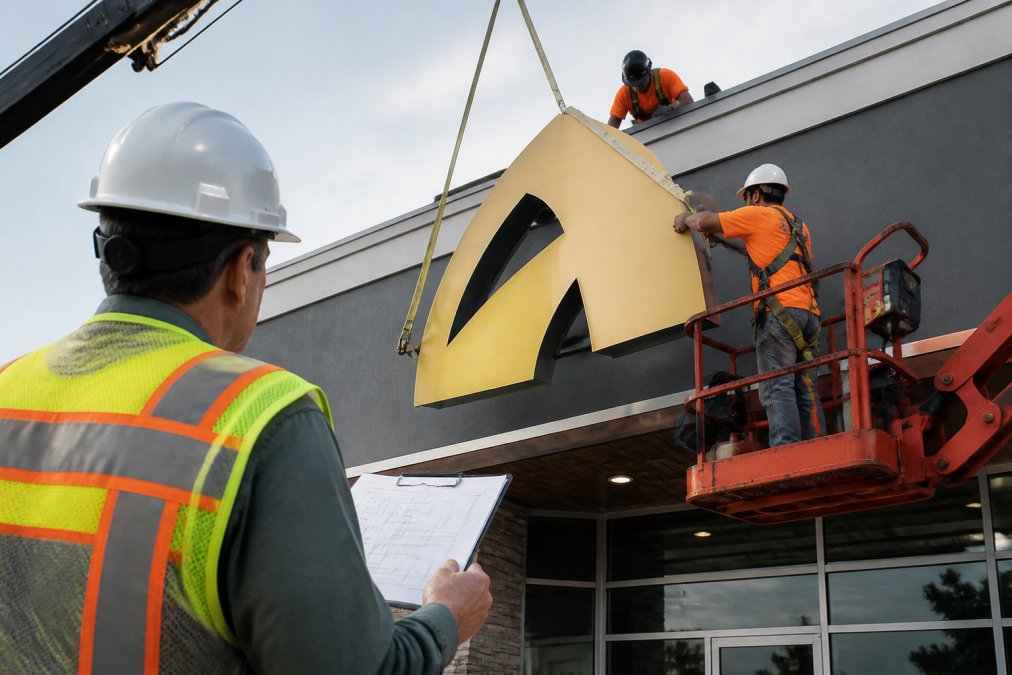
How to manage installation timelines:
Build realistic duration estimates with your signage partner, not optimistic scenarios. Factor in site-specific constraints: weather patterns, typical installation access windows, and coordination dependencies with other trades. Schedule signage installation after structural work is complete but before final occupancy. Create a detailed pre-installation checklist: site surveys, structural certifications, electrical rough-ins, access agreements, safety protocols, and material delivery schedules. Communicate installation windows clearly to all stakeholders. Build schedule buffers for weather and unforeseen conditions; add 20-30% contingency to your base installation duration.
Triton Sign’s approach to tight timelines comes from managing construction projects where delays cascade across the entire build schedule. Our team coordinates with general contractors and other trades to identify the optimal installation window and executes with precision.
4. Supply Chain Disruptions and Material Procurement Delays
Supply chain disruptions in signage fabrication can delay projects by weeks or months. Material procurement is a sequence: design approval, material ordering, fabrication, quality control, and logistics. A disruption at any stage pushes back the entire timeline.
Lead times for signage materials vary widely. Standard materials like aluminum extrusions or acrylic sheet typically have 2-4 week lead times. Specialty materials, custom-color powder coatings, or rare metal finishes can stretch to 8-12 weeks. LED components face periodic supply constraints. Neon tube fabrication has limited suppliers and long backlogs during peak seasons.
Logistics delays compound material delays. Freight carrier capacity fluctuates seasonally. Oversized signage requires specialized trucking. International sourcing adds customs clearance time. A sign fabricated on time but delayed in transit still misses your installation window. Scope changes mid-fabrication trigger additional lead times and redesign cycles.
How to mitigate supply chain risk:
Confirm material availability and lead times before committing to installation dates. Order long-lead items early. Build material contingency into your schedule; add 15-25% buffer to stated lead times. Establish relationships with multiple suppliers for critical components. Freeze design specifications early to avoid mid-fabrication changes. Communicate material status regularly with your fabrication partner, you want visibility into delays weeks before they impact installation, not days before.
For multi-location rollouts, stagger installation dates so material delays on one site don’t cascade across your entire project. Coordinate with your signage provider to understand their inventory position and capacity.
5. ADA Signage Compliance Requirements and Accessibility Standards
ADA signage compliance requirements are non-negotiable, yet they’re frequently overlooked until late in the project (ada.gov). The Americans with Disabilities Act mandates specific standards for signage in public facilities, and non-compliance triggers legal liability, costly remediation, and project delays.
ADA requirements cover character sizing (minimum 5/8 inch height), contrast ratios (70% minimum between text and background), font specifications (sans-serif, no script fonts), mounting heights (typically 48-60 inches to the sign centerline), and tactile/braille elements for permanent directional signage (ada.gov). Digital signage must meet additional standards around brightness, refresh rates, and color contrast. Wayfinding signage requires specific symbol specifications and placement protocols.
Multi-location projects face additional complexity. Each site may have different accessibility requirements based on building layout, occupancy type, and local amendments to federal ADA standards. Non-compliance is a legal liability, the ADA allows private parties to file complaints, and signage violations are among the most frequently cited accessibility issues in construction.
How to ensure ADA compliance:
Engage an accessibility consultant during design phase, not after fabrication. Confirm all signage specifications against current ADA Accessibility Guidelines and any local amendments. For multi-location projects, audit each site’s unique requirements and document them in writing. Require your signage fabricator to certify compliance, including material samples, color contrast verification, and mounting specifications. Conduct a pre-installation compliance review on-site. Build ADA compliance verification into your punch list process.
Triton Sign’s experience with ADA-compliant signage means we understand the nuances that trip up less-experienced providers. We handle tactile and braille specifications, contrast ratio verification, and mounting height compliance as standard practice.
ADA compliance isn’t optional and isn’t something to address after installation. Budget time and cost for compliance verification upfront, it’s far cheaper than remediation after the fact.
Digital Signage Integration and Post-Installation Maintenance
Digital signage integration introduces layers of complexity that traditional static signage doesn’t. A digital sign requires network connectivity, software configuration, content management, and ongoing technical support.
Integration challenges begin with infrastructure. Digital signs need reliable power, network connectivity, and sometimes backup systems. Older buildings may lack adequate electrical capacity or network infrastructure. Running new conduit, upgrading electrical panels, or extending network coverage adds cost and timeline complexity. Site surveys often reveal infrastructure gaps not anticipated in initial planning.
Content management systems require setup, testing, and staff training. Your signage partner needs to coordinate with your IT team to integrate displays securely. Content creation workflows need to be established, who approves content, what format requirements exist, how quickly can content be updated. Post-installation maintenance is critical; digital signs require active monitoring, software updates, content refreshes, and technical support.
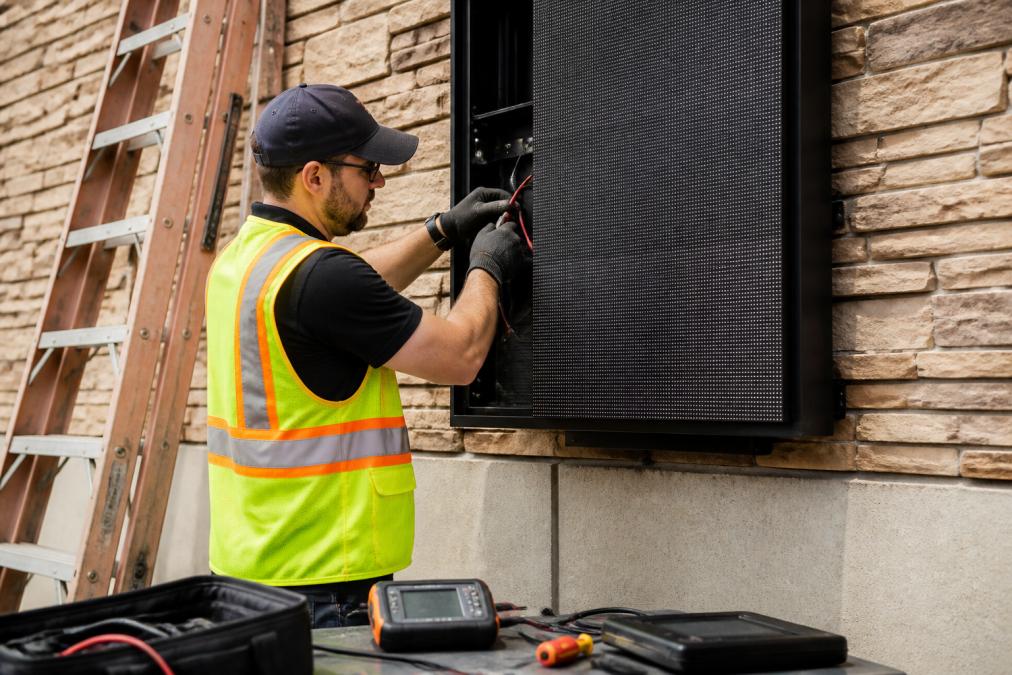
How to manage digital signage successfully:
Plan infrastructure upgrades before installation. Conduct IT assessments to confirm network capacity and security protocols. Establish content governance with clear approval workflows and update frequency. Schedule training for staff managing content. Confirm your signage partner provides ongoing technical support. Understand warranty coverage and response times for failures. For critical signage, consider redundancy, backup displays that maintain brand presence if primary displays fail.
Multi-location digital signage requires centralized management. Ensure your content management system scales across all sites and allows remote updates. Coordinate with IT to monitor network health and display connectivity. Establish maintenance schedules and assign responsibility for each site.
Overcoming Signage Challenges: A Project Manager’s Roadmap
The five signage challenges, budget overruns, permitting delays, installation scheduling, supply chain disruptions, and compliance requirements, are predictable obstacles, not surprises. The difference between projects that run smoothly and those that derail comes down to preparation, communication, and partnership with experienced providers.
Treat signage as a distinct project workstream within your master schedule, not an afterthought. Engage your signage partner early, ideally during design phase. This early engagement surfaces constraints, clarifies requirements, and prevents costly rework.
Build realistic timelines with built-in contingency. Signage projects involve variables beyond pure construction, environmental factors, supply chain timing, regulatory processes, and coordination with other trades all demand schedule buffers. A 20-30% contingency is realistic, not pessimistic.
Lock down scope and specifications before fabrication begins. Change orders during fabrication multiply costs and delay timelines exponentially. A detailed scope of work, signed before any material is ordered, protects both your budget and schedule.
Communicate across all stakeholders, your general contractor, subcontractors, building departments, facilities teams, and tenants. Signage installation affects traffic flow, site access, and operations. Clear communication prevents surprises and coordination failures.
Finally, partner with a signage provider that understands construction project management. Triton Sign’s experience managing signage across construction projects means we anticipate obstacles, coordinate with your team, and deliver on tight timelines and budgets. We’ve worked alongside project managers like you on builds, and we know how to keep signage on the critical path rather than becoming the reason your project slips.
The stakes on signage are higher than many project managers initially recognize. A failed sign installation doesn’t just affect aesthetics, it impacts project timelines, budget performance, and stakeholder confidence. By understanding these five challenges upfront and addressing them with experienced partners, you protect your project’s success. Triton Sign brings proven expertise in budget control, permitting navigation, installation precision, supply chain management, and compliance assurance. Contact us to discuss your upcoming project and see how we can eliminate signage risk from your critical path.
Frequently Asked Questions
What are the most common signage installation delays in construction projects?
Signage installation delays typically stem from permit acquisition bottlenecks, material procurement gaps, and site access restrictions. Structural integrity issues discovered during site surveys, weather delays, and coordination conflicts between subcontractors also cause timeline slips. The most preventable delays occur when scope creep expands signage specifications after fabrication begins. Establishing a clear critical path, securing permits early, and maintaining regular stakeholder communication reduce delays significantly.
How do ADA signage compliance requirements impact project timelines?
ADA signage compliance requirements add 2-4 weeks to typical signage projects because they mandate specific design elements: tactile characters, Braille translations, proper contrast ratios, and precise mounting heights. Project managers must factor in compliance review cycles, potential design revisions, and specialized fabrication for accessible signage. Engaging an ADA consultant early in the project lifecycle prevents costly rework and ensures the signage meets federal accessibility standards without timeline extensions.
What role does a signage contractor play in managing construction project risks?
A skilled signage contractor manages risk mitigation across multiple fronts: they conduct site surveys to identify installation constraints, coordinate logistics with other trades, ensure structural integrity assessments, and handle permit acquisition guidance. They provide realistic installation timelines, flag supply chain vulnerabilities early, and maintain quality control standards. Their experience with safety protocols and hazard management protects both the project schedule and budget while ensuring the final signage meets technical specifications and local regulations.
How can project managers coordinate signage fabrication with site readiness?
Effective coordination requires establishing project milestones that align fabrication schedules with on-site access availability and gray work completion. Project managers should maintain regular stakeholder communication with the signage fabricator, general contractor, and subcontractors to confirm structural readiness and installation windows. Using a shared project documentation system and weekly status updates prevents scheduling conflicts. Building a 1-2 week buffer into the installation timeline accounts for unexpected site conditions or structural delays.
This article was written using GrandRanker