Table of Contents
- What Custom Channel Lettering Actually Delivers for a Business
- Channel Letter Sign Cost Factors That Drive Your Total Investment
- Benefits of LED Channel Letters: Energy, Longevity, and Nighttime Visibility
- Channel Letters vs Flat Signs: Which Fits Your Storefront?
- Tax Deductions and Depreciation: The ROI Most Owners Miss
- Maintenance Checklist and Lifespan: What to Expect After Installation
- Frequently Asked Questions
Last Updated: September 18, 2026
What Custom Channel Lettering Actually Delivers for a Business
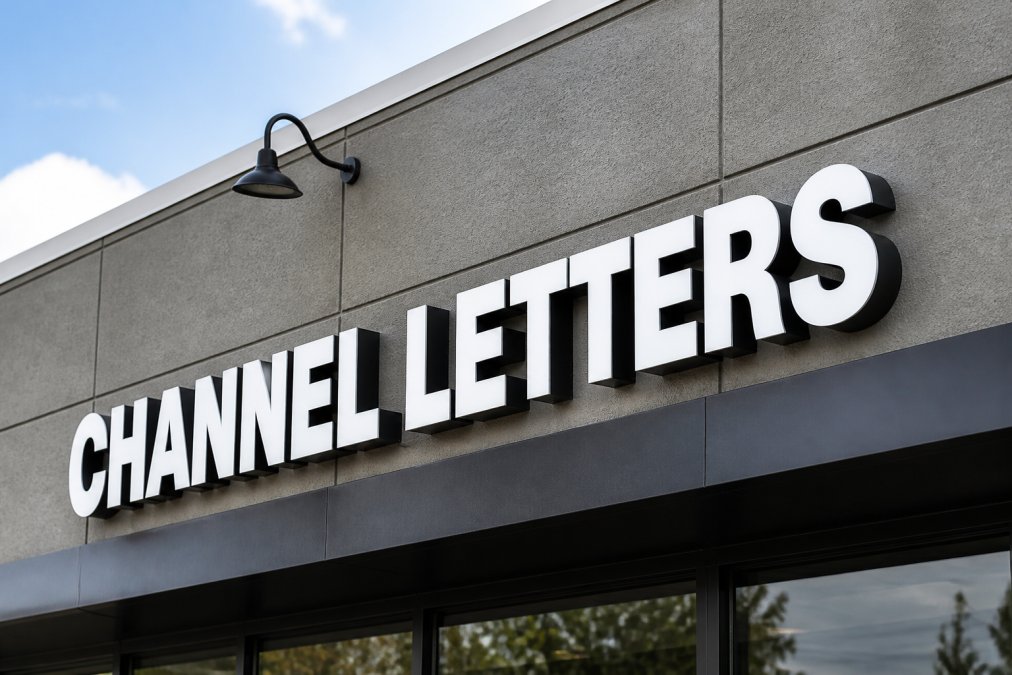
Custom channel lettering is a three-dimensional, individually fabricated sign where each letter or logo element is built as its own sealed unit, lit from within and mounted to a raceway or directly to the building face. At Triton Sign, we’ve fabricated and installed these signs for construction project managers, facilities teams, and business owners, and the pattern is consistent: the businesses that get the most value treat the sign as a marketing asset, not a construction line item.
Illumination Options: Front-Lit, Back-Lit, and Open-Face
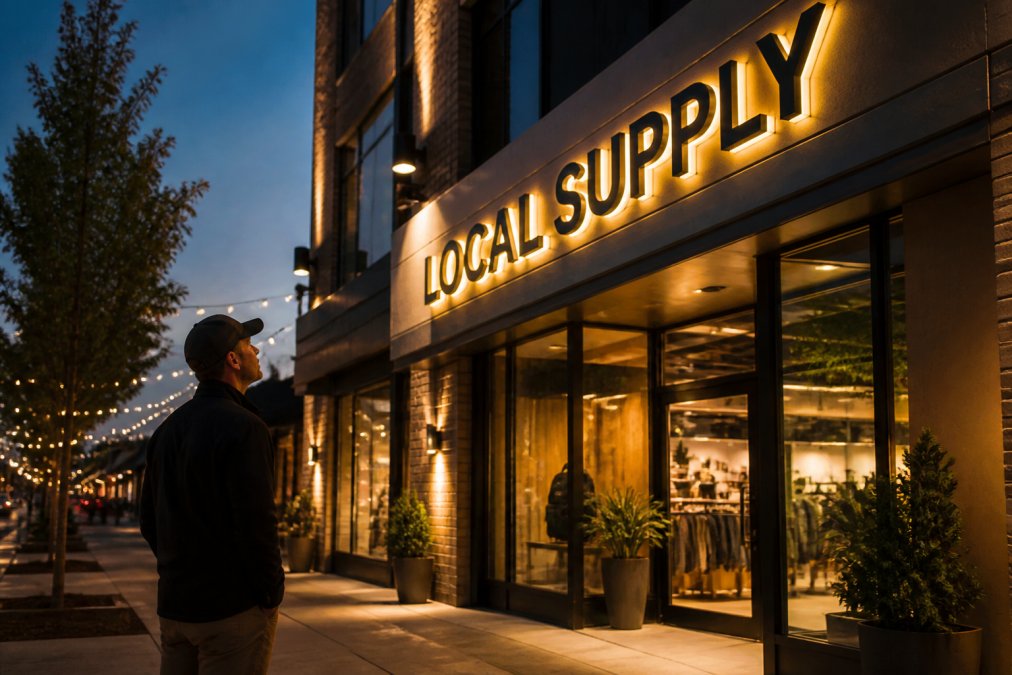
Front-lit letters push light through a translucent acrylic face, which gives the strongest nighttime visibility from a distance. Back-lit, or halo-lit, letters throw light against the wall behind them, producing a softer glow that reads as more upscale. Open-face letters leave the channel exposed and rely on external lighting or neon inside.
Channel Letter Sign Cost Factors That Drive Your Total Investment
Channel letter sign cost factors break into four buckets: letter size and count, illumination type, materials, and installation complexity. A single-line building sign with ten letters costs far less than a multi-line sign with a logo cabinet, and that gap widens fast once you add halo lighting or custom returns.
The Cost Drivers, Ranked by How Much They Move the Number
- Letter count and height. This is the biggest single lever. Price scales roughly with the total surface area of the letters, so going from 12-inch to 24-inch letters on the same sign can more than double the fabrication line. A logo cabinet or a multi-line layout adds a second fabrication pass.
- Illumination type. Front-lit is the baseline. Halo-lit adds a second set of returns and a more precise standoff, which typically pushes cost up. Open-face with internal neon is usually the most expensive to build and the most expensive to service.
- Materials. Standard acrylic faces on aluminum returns are the workhorse. Specialty finishes, brushed metal returns, painted faces, custom color matching, add material cost and lead time. Face material also drives how the sign ages: cheaper acrylic yellows faster under UV and heat.
- Installation and electrical. Mounting height, facade type, and whether power already exists at the sign location are the three variables that swing this bucket most. A sign that needs a new dedicated circuit, a disconnect, and a permit for the electrical work is a materially different project than one that ties into an existing circuit.
The Line Items That Don’t Show Up in the Fabrication Quote
A fabrication quote is not a project budget. Four costs sit outside it, and owners who don’t plan for them get surprised:
- Permit fees. Set locally and typically scaled to sign area and type. Your jurisdiction’s fee schedule is public, pull it before you approve a design.
- Engineering. Larger signs, high-wind zones, and signs mounted above a certain height often require a stamped structural calculation from a licensed engineer. That’s a separate invoice.
- Electrical work. A licensed electrician to run the circuit, install the disconnect, and make the final connection. This is almost never bundled into the sign quote.
- Landlord design review. If you lease, your landlord’s sign criteria can require changes, smaller letters, different mounting, no illumination, that force a redesign after you’ve already paid for drawings.
A common mistake is approving a design before checking the landlord’s sign criteria and the local sign code. Redesigning a fabricated sign after the fact can cost more than getting the drawings reviewed first.
How to Compare Two Quotes Apples to Apples
Two quotes for the “same” sign are rarely the same scope. Before you compare totals, confirm each quote includes: fabrication, freight, installation labor, electrical connection, permit coordination, and any engineering. A lower number that excludes electrical and permitting is not a lower number, it’s a partial number. Ask for the breakdown in writing, then compare the line items, not the bottom line.
Permits, Zoning, and Sign Codes: The Costs Nobody Quotes Upfront
Sign permits are issued by your local jurisdiction, and the requirements vary by municipality, zoning district, and even by how the sign is illuminated. A permit application typically requires scaled drawings, an electrical plan, and sometimes a structural calculation for larger signs.
Pull your jurisdiction’s sign permit application and fee schedule before you request fabrication quotes. Knowing the allowed square footage and illumination rules up front keeps you from paying for a design you can’t legally install.
Benefits of LED Channel Letters: Energy, Longevity, and Nighttime Visibility
The benefits of LED channel letters come down to three practical wins: low energy draw, long service life, and consistent brightness across the sign face. LEDs consume a fraction of the power of older neon or fluorescent illumination and produce almost no heat, which matters for acrylic faces that can yellow under sustained heat exposure.
What the Energy Savings Actually Look Like
Most articles stop at “LEDs are efficient.” Here’s the mechanism behind the claim, so you can sanity-check any number a vendor gives you.
Two practical implications follow:
- The sign is a rounding error next to your other loads. An illuminated channel letter sign draws far less than a commercial refrigerator, an HVAC compressor, or a bank of interior lights. For most storefronts, the sign’s monthly electricity cost is a small line item, often a few dollars, not a few hundred.
- The real savings versus neon is in service life, not the meter. Neon and fluorescent illumination degrade and require more frequent service calls. LEDs run cooler and last far longer, so the money you save shows up in avoided maintenance visits more than in kilowatt-hours.
Longevity: What Fails First, and What It Costs
LED modules typically outlast the sign’s other components, and when a module does fail, it can usually be replaced without rebuilding the letter. That’s the difference between a maintenance call and a full refabrication.
Nighttime Visibility Is the Real Payoff
An illuminated sign stays legible after dark, when foot traffic and drive-by traffic are still deciding where to stop. For businesses that depend on walk-ins, that evening visibility is often the single biggest contributor to return on investment.
LED channel letters offer benefits in service life and evening visibility.
Channel Letters vs Flat Signs: Which Fits Your Storefront?
Channel letters vs flat signs is really a question about budget, visibility, and how long you plan to stay. Flat signs, also called panel signs, are printed or routed flat panels mounted to a wall or monument. They cost less upfront and install faster. Channel letters are fabricated, wired, and mounted individually, so they cost more and take longer to produce.
| Factor | Channel Letters | Flat Panel Signs |
|---|---|---|
| Upfront cost | Higher | Lower |
| Nighttime visibility | Built-in illumination | Depends on external lighting |
| Dimensional impact | 3D, stands off the wall | Flat to the surface |
| Lifespan | Long with module replacement | Long, but faces fade |
| Best for | Storefronts, hospitality, retail | Wayfinding, secondary signage |
If your storefront is your main source of new customers, channel lettering is usually the better long-term buy even at a higher upfront cost. If the sign is secondary wayfinding, a flat panel does the job for less.
Tax Deductions and Depreciation: The ROI Most Owners Miss
Signage is generally treated as a business asset, which means it can often be depreciated over its useful life rather than expensed in a single year. Depending on the type of sign and how it’s classified, some businesses can deduct a portion of the cost in the year of purchase under federal tax rules.
Maintenance Checklist and Lifespan: What to Expect After Installation
A well-built channel letter sign typically lasts a decade or more, with LED modules being the most common replacement item. The maintenance schedule is simple, and skipping it is what shortens sign life.
- Inspect the sign face and returns every six months for cracks, water intrusion, or discoloration
- Check that all letters are evenly lit; a dark segment usually means a failed module
- Clear debris and bird nests from the raceway and mounting hardware
- Verify caulk and seals around penetrations annually
- Have the electrical connections checked by a licensed electrician every few years
- Wash acrylic faces with mild soap and water; avoid abrasive cleaners
Photograph the sign right after installation and again at each inspection. When you file a warranty or insurance claim, dated photos settle the question of whether damage was pre-existing.
Frequently Asked Questions
What is the average lifespan of an LED channel letter sign?
LED modules in quality channel letters typically last 50,000 to 100,000 hours, which translates to roughly 10 to 15 years of nightly use. The aluminum returns and acrylic faces hold up even longer. What shortens lifespan is water intrusion, cheap power supplies, and skipped maintenance. A yearly inspection of seals, wiring, and mounting hardware keeps a channel lettering investment performing well past the decade mark.
How do channel letters compare to flat cabinet signs for brand visibility?
Channel letters create dimensional depth and individual letterforms that flat signs cannot match. That three-dimensional shape catches light from more angles and reads clearly from farther away, especially at night. Flat signs cost less upfront and work fine for tight budgets, but they blend into a strip mall facade. For businesses that depend on foot traffic and nighttime visibility, channel lettering usually wins on visual impact.
Are there zoning or permit considerations for channel lettering?
Yes, and they vary by municipality. Most jurisdictions regulate sign size, height, projection, illumination type, and placement before you can install. Some historic districts and overlay zones restrict illuminated signage entirely. Pull the local sign code early, submit drawings for a permit, and budget for the review timeline. Skipping this step can mean removal orders and rework that wipe out any savings.
Do channel letter signs require frequent maintenance?
Not frequent, but not zero. Plan on an annual check: inspect acrylic faces for cracks, test LED modules, verify the power supply, and reseal any gaps where water can enter. Cleaning the faces once or twice a year keeps light output strong. Well-built channel lettering with aluminum returns and quality LEDs needs little beyond that, but ignoring small issues leads to bigger repairs later.