
Table of Contents
- Why Verifying a Sign Contractor’s License Matters in Seattle
- How to Use the Washington State L&I Contractor Lookup
- Registration vs. Licensing: What the Status Codes Actually Mean
- How to Verify Contractor Bond and Insurance Coverage
- Checking Commercial Sign Permit Requirements in Seattle
- Specialty Trades: Electrical, Plumbing, and General Sign Work
- Frequently Asked Questions
Last Updated: September 21, 2026
Why Verifying a Sign Contractor’s License Matters in Seattle
Hiring an unlicensed sign contractor can leave you paying twice for the same job. When a contractor lacks proper registration, you lose key protections: no bond to claim against, no workers’ compensation coverage, and little recourse if the work fails inspection. Learning how to verify sign contractor licenses in Seattle protects your project, your budget, and your liability exposure.
What Happens When You Hire an Unlicensed Sign Contractor
The consequences stack up fast:
- No bond to claim against. If the contractor damages your property or disappears with a deposit, you have no surety bond to recover from.
- No workers’ compensation. If a worker gets hurt on your site, you could face liability.
- Failed inspections. Unpermitted work often fails inspection, forcing you to pay for removal and reinstallation.
- Civil penalties. Washington State can fine property owners who hire unregistered contractors.
The state’s contractor registration requirements make the rules clear. Registration is not optional.
How to Use the Washington State L&I Contractor Lookup
The Washington State Department of Labor & Industries (L&I) runs a free public verification tool at lni.wa.gov. Anyone can search it in under two minutes. You do not need an account, and there is no fee. This is the same database the state uses to track every registered contractor, so it is the authoritative source, not a third-party directory that may be stale.
What Information You Need Before You Search
You can search by license number, business name, or the name of a principal. Here is what works best:
- License number (fastest and most accurate, it is unique to one business)
- Business name as it appears on the contract (watch for DBAs and slight spelling variations)
- Principal’s full name if you only have a handshake agreement
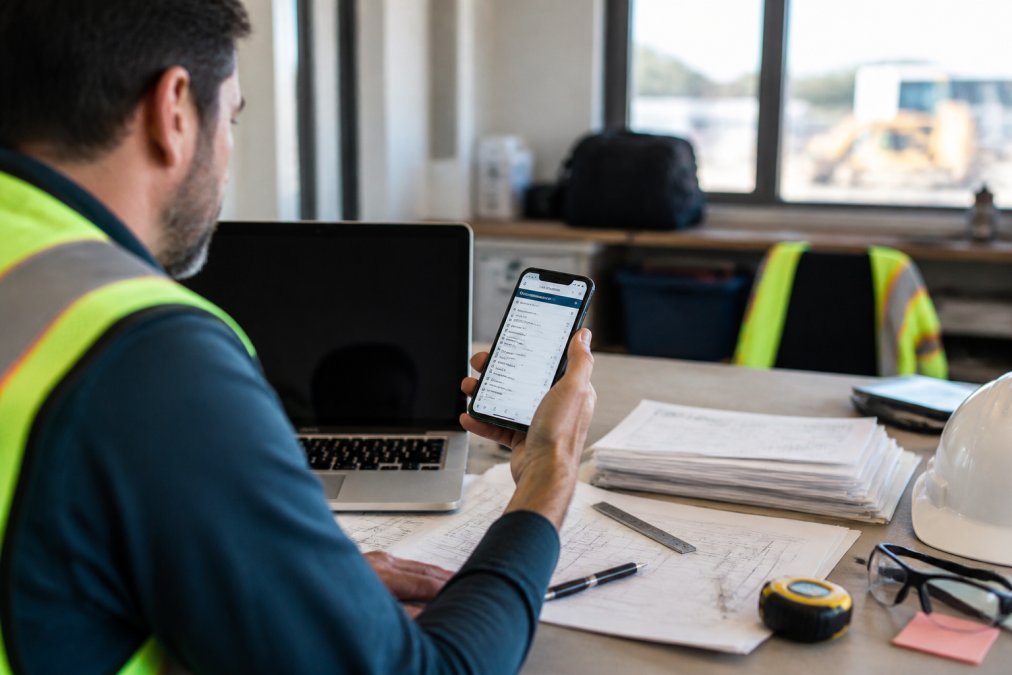
How to Verify on Your Phone in Under Two Minutes
Mobile verification is simpler than most people expect. Follow these steps:
- Open your phone browser and go to the L&I contractor lookup page.
- Tap the search field and enter the contractor’s license number.
- Check the status. It should read Active.
- Confirm the business name matches your contract exactly.
- Check the bond and insurance dates have not expired.
- Take a screenshot for your records.
Reading the Record: What Each Field Actually Tells You
Most homeowners glance at the status and stop. The rest of the record is where the real signal lives. Here is how to read it:
- Contractor name and UBI number. The UBI (Unified Business Identifier) is the state’s master business number. If the name on the record does not match the name on your contract, ask why before you sign.
- Registration effective and expiration dates. Registration is renewed on a cycle. If the expiration date is close, confirm the contractor has already filed the renewal, a lapse mid-project is a real problem.
- Bond company and bond amount. The bond is your financial backstop. Note the surety company name; you may need it later.
- General liability insurance carrier and policy expiration. This is separate from the bond and covers property damage and injuries.
- Workers’ compensation status. In Washington, most contractors must cover their employees through the state fund or an approved self-insured plan (Do I Need a Workers’ Comp Account?). A contractor with no coverage is a liability risk to you.
- Principal names. Cross-check against the person signing your contract.
If the record shows a bond or insurance expiration within the next 30 days, ask the contractor for proof of renewal before work starts. Records can lag by a few days, and a lapsed policy mid-job is a real risk.
What to Do If the Search Returns Nothing
No result is not the same as a bad result, but it is not good news either. If the search returns nothing:
- Re-check the spelling and try the license number instead of the name.
- Try the principal’s name.
- Ask the contractor for their UBI number and search that.
Registration vs. Licensing: What the Status Codes Actually Mean
Registration means the contractor has filed with the state and met basic requirements. Licensing is a separate layer for specialty trades like electrical work. A general sign contractor needs registration. An electrician needs both.
| Status | What It Means | What to Do |
|---|---|---|
| Active | Registered and in good standing | Safe to hire |
| Inactive | Registration lapsed or was not renewed | Do not hire until resolved |
| Suspended | State action taken against the contractor | Walk away |
| Expired | Bond or insurance lapsed | Ask for proof of renewal |
What to Do If a Contractor Shows Inactive or Suspended
An inactive status usually means the contractor missed a renewal. A suspended status means the state took action. Both are red flags.
Hiring a contractor with an inactive or suspended registration can void your insurance claim if something goes wrong on site. You may also face a civil penalty from the state.
How to Verify Contractor Bond and Insurance Coverage
A surety bond protects you if the contractor fails to complete the work or violates permit rules. Insurance covers injuries and property damage. Both must be current.
Check these three items on the L&I record:
- Bond amount and expiration date
- General liability insurance status
- Workers’ compensation coverage
Call the insurance company directly to confirm coverage is still active. Records can lag by a few days, and a lapsed policy is a real risk on an active job site.
Checking Commercial Sign Permit Requirements in Seattle
Most commercial sign installations require a permit from the city. The permit process checks that your sign meets zoning, size, and safety rules. It also confirms the installer is registered.
Here is what triggers a permit:
- New exterior signage of any size
- Changes to an existing sign’s structure or lighting
- Illuminated signs, including neon and LED
- Signs over a certain height or square footage
Specialty Trades: Electrical, Plumbing, and General Sign Work
Sign work often involves multiple trades. A single illuminated sign might need a general sign contractor, an electrician, and sometimes a structural specialist. Each trade has its own regulator, its own credential, and its own verification path. This is the section most guides skip, and it is where projects actually go wrong.
Registration vs. Licensing: The Distinction That Trips People Up
These two words get used interchangeably, but in Washington they mean different things:
- Registration is what a general or specialty contractor files with L&I. It confirms the business has met bonding, insurance, and workers’ comp requirements. It is not a test of skill.
- Licensing is a separate credential issued by a trade-specific board or agency. It confirms the individual has passed an exam and met experience requirements for that trade.
Who Regulates What
| Trade | Regulator | Credential to Verify |
|---|---|---|
| General sign work | L&I | Contractor registration (Active status) |
| Electrical | L&I Electrical Program | Electrical contractor license + individual electrician certificate |
| Plumbing | L&I Plumbing Program | Plumber certification + contractor registration |
| Structural / engineering | State board for professional engineers | PE stamp on drawings for large or load-bearing signs |
Plumbing is rarely relevant to signs, but it can come up with water features, living wall displays, or restroom signage tied to a build-out. Structural review matters for large monument signs, pole signs, and any sign attached to a building envelope where wind load is a factor.
How to Verify Each Trade
- General sign contractor: Search the L&I contractor lookup by name or license number. Confirm Active status, current bond, and current insurance.
- Electrical: Ask for the electrical contractor’s license number and the individual electrician’s certificate number. Both can be checked through L&I. A registered general contractor cannot legally perform electrical work.
- Plumbing: Verify the plumber’s certification through L&I and confirm the plumbing contractor is separately registered.
- Structural: Ask for the engineer’s name and license number, and confirm the stamp appears on the drawings submitted with the permit.
Verify every trade on the job, not just the lead contractor. A subcontractor with a lapsed license can sink your whole project, and in some cases, void the permit.
If a general sign contractor tells you they can “handle the electrical too” without a licensed electrician, that is a compliance problem. Electrical work performed without the proper license can fail inspection, void insurance coverage, and expose you to liability if there is a fire or shock incident.
A Note on Subcontractors
Most sign projects involve at least one subcontractor, an electrician for the connection, a crane operator for the lift, or a welder for the frame. The lead contractor’s Active status does not cover them. Ask for a list of every subcontractor who will be on site, and verify each one before work begins. This is the single most overlooked step in the verification process, and it is the one most likely to protect you.
Frequently Asked Questions
How can I verify a contractor’s license in Washington State?
Use the Washington State Department of Labor & Industries (L&I) contractor lookup tool online. Enter the contractor’s license number or business name to see registration status, bond amount, insurance coverage, and expiration date. The tool is free and updates in real time. For sign contractors in Seattle, also check whether they hold a current Seattle business license and any required trade certifications. If the status shows Inactive or Suspended, do not sign a contract until it is resolved.
Do sign contractors need a specific license in Washington?
Yes. Any contractor performing sign installation or structural work in Washington must register with the state Department of Labor & Industries. Sign contractors who perform electrical work, such as wiring illuminated signs, also need an electrical license through L&I. General sign fabrication and installation typically falls under a general or specialty contractor registration. Always verify both the state registration and any trade-specific license before hiring.
How do I check if a contractor has active insurance and bonding?
The Washington State L&I contractor lookup shows bond and insurance status for every registered contractor. Look for an active surety bond and current liability insurance with an expiration date in the future. Washington requires contractors to carry a minimum bond amount, which varies by contractor type. If the bond or insurance has lapsed, the contractor is out of compliance and you risk paying for damage or incomplete work out of pocket.
Does a sign contractor need a local business license in addition to a state registration?
Yes, in most cases. A sign contractor working in Seattle must hold a valid Washington State contractor registration through L&I and a Seattle business license. For projects involving structural changes or electrical connections, additional city permits may be required. The Seattle Department of Construction & Inspections (SDCI) manages permit records. Always ask for both the state registration number and the local business license before work begins.